Home care: What truly takes the pressure off family caregivers

Home care often starts subtly. At first, it's just about small things: shopping, doctor's appointments, medication, or household support. But over time, many relatives take on more and more responsibility, often in addition to their jobs, their own families, and their normal daily lives. Many then ask themselves the same questions: What help are we entitled to? What services can be applied for? When do you need a care level? And what really relieves the burden in everyday life? This is precisely where uncertainty often arises. Because many families do not use available support, even though they would be entitled to it. Yet even individual services can help to better organize home care and noticeably relieve the burden on relatives.
Care at Home: Why Family Members Are So Important
Most people in need of care want to stay in their familiar surroundings for as long as possible. For many families, this is a matter of course. At the same time, care at home also means responsibility, organization, and constant attention.
Relatives often take on tasks such as:
- Daily care
- Help with washing or dressing
- Shopping and household chores
- Doctor's appointments and medication
- Organizing care services
- Home safety
This can be fulfilling, but also stressful. Especially when relatives feel they have to be constantly available.
Why a care level is so important
A care grade is the basis for many services provided by the long-term care insurance fund. Without a care grade, many financial and organizational aids remain unused. The classification is made through an assessment. This assessment determines how independently a person can still manage their daily life. It is not only about physical care, but also about mobility, orientation, safety in everyday life, and the ability to care for oneself. Even with care grade 1, initial support is available. From care grade 2 onwards, further services such as care allowance or day care are added.
What support is available for home care?
Many relatives are unaware of how much support is actually available. Depending on the care level and situation, various benefits may be applicable.
These include:
- Care allowance
- Care in kind
- Relief amount
- Day care
- Respite care
- Short-term care
- Care aids
- Home modifications
- Care support allowance
- Tax relief
Which benefits are useful depends heavily on how the care is organized.
Care Allowance: Financial Support for Home Care
Nursing care benefits are paid when people in need of care are looked after at home by relatives, friends, or other close individuals. The amount depends on the care level. Nursing care benefits are available from care level 2. Currently, the monthly amounts are 347 euros for care level 2, 599 euros for care level 3, 800 euros for care level 4, and 990 euros for care level 5. The money is paid to the person in need of care. It can be used to organize private home care and support relatives in their daily lives.
In-kind care benefits: When a care service provides support
Relatives cannot always manage everything on their own. In such cases, nursing benefits in kind can help. These finance the services of an outpatient care service.
For example, a care service can provide support with:
- Personal hygiene
- Medication administration
- Dressing changes
- Mobilization
- Daily care
Care allowance and nursing benefits in kind can also be combined. This is particularly helpful when relatives continue to take on much themselves but require professional support with specific tasks.
Relief amount: 131 Euros that many do not claim
People in need of care who receive home care are entitled to a relief amount of up to 131 euros per month. This applies from care level 1 onwards. The amount can be used for recognized support services in everyday life, for example:
- Everyday companionship
- Care
- Household help
- Support with shopping
- Relief for caring relatives
Important: The relief amount is usually not simply paid out. In most cases, services must first be used and then submitted to the long-term care insurance fund with an invoice. This is precisely why this amount remains unused in many families, although it can be very helpful in everyday life.
Security that accompanies you in everyday life
The Gardia emergency wristband supports seniors at home and on the go with quick help in an emergency. Automatic fall detection, GPS tracking, and the direct connection to relatives or the 24/7 emergency call center create more security without restricting everyday independence.

Day Care: Relief for Relatives and Structure for Daily Life
Day care can be a particularly important form of relief. In this model, people in need of care are looked after in a facility during the day and continue to spend the evening and night at home. This helps relatives to create regular free time, for example for work, recreation, appointments, or their own obligations.
For older people, day care also offers:
- social contact
- shared meals
- exercise and activation
- care by specialists
- a fixed daily structure
Day care can be particularly useful if care-dependent relatives cannot easily stay alone during the day, or if they lack social contact in their daily lives. You can find out more about this in the article on day care.
Temporary substitute care: When family caregivers need a break
Caring relatives also need breaks themselves. This is often forgotten in everyday life. Those who provide care for months or years cannot function permanently without rest. If relatives are ill, need a holiday, or simply require a break, substitute care can help. In such cases, another person or a service temporarily takes over the care. This can be a great relief, as care does not have to be completely interrupted, and provision remains secured.
It is important: Substitute care should not only be planned in an emergency. Many families benefit from establishing a substitute or support early on.
Short-term care: When home care is temporarily insufficient
Short-term care can be useful when care at home is temporarily insufficient. For example, after a hospital stay, due to a deterioration in health, or if relatives are unable to provide care at short notice. The person requiring care then receives inpatient care for a limited period. Short-term care can help bridge transitions and relieve family members during difficult phases.
Care Aids: Small Helpers with a Big Impact
Care aids can significantly ease everyday life at home. These include, for example, disposable gloves, disinfectants, bed protection pads, or protective aprons. Up to 42 euros per month can be covered by the long-term care insurance fund for consumable care aids. The prerequisites are usually a recognized care level and care in the home environment.
Technical aids can also be important. These include, among others:
- Walking aids
- Grab rails
- Shower aids
- Care bed
- Night lighting
- Home emergency call systems
- Mobile emergency call bracelets
Especially small adjustments can make a big difference in everyday life. Especially with walking uncertainty, dizziness, or existing fall risk, many families desire additional safety in everyday life. Relatives cannot always be on-site, yet they want to know that help can be reached quickly in an emergency. The Gardia emergency call bracelet was specially designed for typical movement patterns of older people and automatically detects critical situations through integrated fall detection. In an emergency, help can be organized immediately, either through registered relatives or a professional 24/7 emergency call center. This creates an additional safety net in everyday life. Many users report that with this protection, they feel safer again when going for walks, out and about, or alone at home. Precisely this feeling of security can help to maintain independence and freedom of movement for longer.
Home care and taxes: What relatives should consider
Home care can also be tax-relevant. Many relatives do not know that certain costs can be declared in their tax return. Depending on the situation, various options are available:
- Care lump sum
- extraordinary expenses
- household-related services
The care lump sum can be relevant if relatives provide care free of charge. Self-incurred care costs can under certain circumstances be considered as extraordinary expenses. Paid support in the household or by care services can partly be claimed as household-related services. It is important to collect receipts carefully and separate costs clearly. You can find more on this topic and helpful tips in our other article.
Better connected relatives
With the My Gardia App, important contacts remain quickly accessible in an emergency. Relatives can receive notifications and manage important information centrally. This creates more transparency, orientation and security for the whole family.


What Really Relieves Relatives
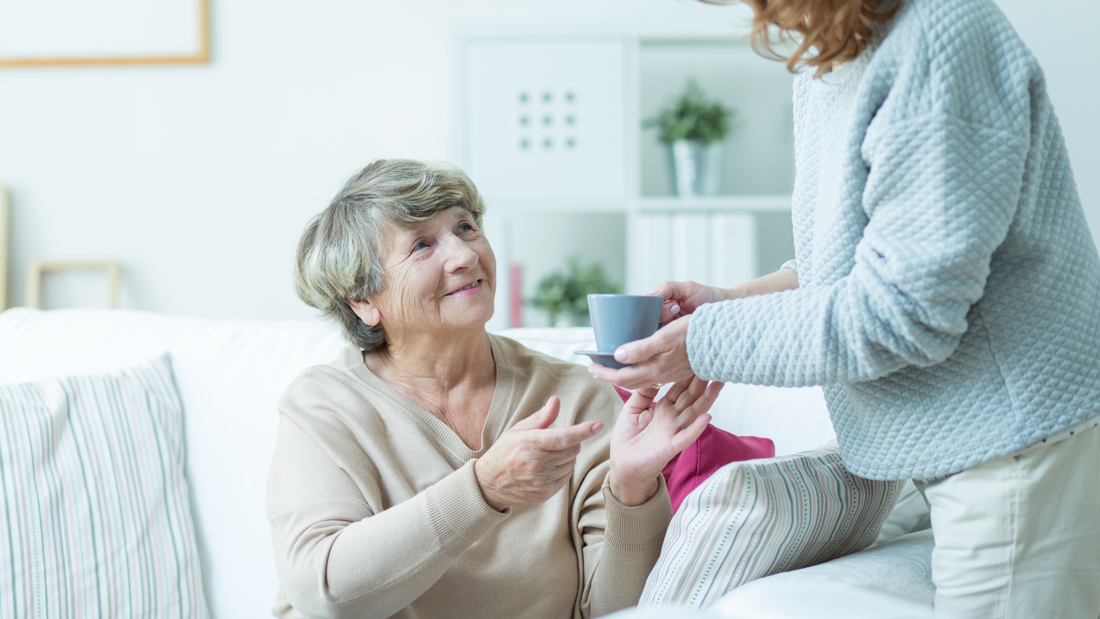
For many families, home care not only means support in everyday life, but also responsibility, organization, and constant availability. That is precisely why it is important to accept help early on and not try to manage the daily care routine alone. Often, relief does not come from a single big solution, but from several small supports that together make everyday life safer and more predictable.
1. Apply for a care level early
A recognized care level is the basis for many benefits from the long-term care insurance fund. The sooner the application is submitted, the faster financial aid, care allowance, or support services can be utilized.
2. Utilize benefits from the long-term care insurance fund
Many families do not use available benefits at all at first, or only very late. However, relief benefits, substitute care, day care, or care aids can noticeably relieve relatives in everyday life.
3. Distribute tasks within the family
Care should ideally not fall on a single person. It often helps to clearly divide tasks, such as doctor's appointments, shopping, organization, or regular visits.
4. Accept support in everyday life
Nursing services, day care, or everyday assistance can help create consistent relief. This gives relatives more freedom and simultaneously provides additional support for the person in need of care.
5. Improve safety at home
Especially with insecurity when walking or an existing risk of falling, many relatives wish for more safety in everyday life. Solutions such as the Gardia emergency call wristband with automatic fall detection and direct connection to relatives or the emergency call center can help to detect emergencies more quickly and organize support.
6. Take your own breaks seriously
Many relatives try to do everything alone for a long time. However, continuous strain can become physically and emotionally very demanding. Regular breaks and support are therefore important to be able to organize home care well in the long term.
Home care often works better when support is accepted early. Because in the end, it's not just about provision, but also about safety, stability, and the good feeling of not being alone in everyday life.
FAQ / Frequently Asked Questions
What support do family caregivers receive?
Depending on the care level and situation, family caregivers can be supported through care allowance, relief amount, respite care, day care, care aids, or tax relief.
From which care level is care money available?
Care allowance is available from care level 2 if home care is privately organized.
What can you apply for when receiving home care?
These include care grade, care allowance, care services in kind, relief amount, care aids, day care, substitute care and grants for housing adaptations.
What is the relief amount?
The relief amount is a monthly benefit for individuals in need of care receiving home care. It amounts to up to 131 euros and can be used for recognized support services in everyday life.
What are the everyday benefits of the Gardia emergency wristband?
The Gardia emergency wristband offers additional safety at home and on the go. In an emergency, help can be quickly organized at the push of a button or automatically through integrated fall detection, either via relatives or a professional 24/7 emergency call center. Many users feel safer as a result and remain independent in their daily lives for longer.
"In the beginning, we tried to organize everything ourselves. But the constant worry still lingered in the back of our minds – especially at night or when my mother was out alone. With the Gardia emergency wristband, many things became easier. Above all, the automatic fall detection and the direct accessibility of emergency contacts now give us significantly more security in everyday life. My mother feels more independent again, and we as a family are more at ease because we know that in an emergency, help can be organized quickly."
Sources:
-
https://www.bundesgesundheitsministerium.de/pflegegeld
-
https://www.bundesgesundheitsministerium.de/themen/pflege/pflegeversicherung.html
-
https://www.bundesgesundheitsministerium.de/pflege-zu-hause
-
https://www.bundesgesundheitsministerium.de/pflegehilfsmittel
-
https://gesund.bund.de/pflege-zu-hause
-
https://www.finanztip.de/pflegekosten/
- https://www.steuern.de/pflegekosten