Emergency bracelet for seniors: The most frequently asked questions answered

We all want to live independently for as long as possible. At the same time, the risk of falls or medical emergencies increases with age. This is precisely where emergency call bracelets come in: they make it possible to quickly call for help in an emergency. Nevertheless, there are many questions surrounding the topic. Relatives want to know whether an emergency call system really makes sense. Seniors often wonder how it works or whether their health insurance covers the costs.
This article answers the most frequently asked questions about emergency call bracelets for seniors.
How does an emergency wristband for seniors work?
A senior emergency wristband is a small, wearable device that is worn like a watch on the wrist. In an emergency, a simple press of a button is enough to trigger an alarm immediately. Modern systems often feature fall detection, which automatically places an emergency call in the event of a fall, even if the wearer is unconscious.
The emergency call is then forwarded to predefined contacts or directly to an emergency call center. Depending on the system, relatives can be informed immediately, or a professional emergency service quickly organizes help.
Many senior emergency wristbands operate via mobile communication, so they function reliably even outside the home. Typical functions include emergency calls at the touch of a button, contact with stored emergency contacts, GPS tracking for mobile systems, and sometimes automatic fall detection.
The great advantage of a senior emergency wristband is that help can be called at any time, even if no phone is nearby. This way, the wristband offers security and independence in everyday life.
When is an emergency call bracelet truly useful?
An emergency call bracelet is often purchased when elderly people live alone or have already fallen once. In many cases, however, the decision also comes from relatives who want more security.
An emergency call system can be particularly useful if:
- a person lives alone
- balance problems or dizziness occur
- a fall has already happened
- uncertainty when walking arises
The aim is not to restrict independence. On the contrary: many seniors even feel freer with an emergency call system because they know that help is available in an emergency.
Staying independent with everyday security
Many seniors want to remain active and continue to shape their daily lives independently. An emergency call bracelet ensures that help is quickly accessible in an emergency.

What happens when the emergency call is triggered?
When the emergency call button is pressed, a predefined sequence is automatically initiated.
Depending on the system, the following may occur:
- Relatives are informed
- An emergency call center contacts the device
- Help is organized
- If necessary, an emergency service is notified
Many modern emergency wristbands for seniors work with a so-called alarm chain. This means that several contact persons are informed simultaneously or successively until someone confirms and responds to the emergency call. This ensures that help arrives quickly in an emergency.

Automatic fall detection as additional protection
Some modern emergency call systems for seniors also offer automatic fall detection. Sensors in the device analyze typical movement patterns of a fall. If no movement is registered for a long time afterward, an alarm can be triggered automatically.
This function is particularly helpful if the emergency button cannot be reached, the person is temporarily unconscious, or initially underestimates the fall. Such functions do not replace personal attention but offer additional safety in everyday life.
The Gardia emergency wristband combines the classic emergency button with intelligent, AI-based FallGuard360° fall detection. If a fall is detected, the system automatically triggers an alarm and informs stored emergency contacts or Bosch's professional 24/7 emergency call center. They can then establish a voice connection directly to the wearer via the emergency wristband to quickly coordinate help.
Does health insurance cover an emergency call bracelet?
One of the most frequently asked questions about emergency call systems concerns the costs.
Generally, the nursing insurance fund can subsidize an emergency call system or cover the monthly fees if a care level has been assigned and there is a situation in which help cannot be obtained quickly enough in an emergency. This often applies to older people who live alone or who have an increased risk of falls or medical emergencies due to health limitations.
Important to know: In most cases, it is not necessarily the purchase costs for a device that are covered, but primarily the ongoing costs for the emergency call service. These include, for example, connection to an emergency call center, technical monitoring, or regular function checks of the system.
Since the requirements can be assessed differently depending on the nursing insurance fund, it is worth looking at the options more closely.
Cost coverage for the monthly PflegePlus subscription of the Gardia emergency wristband by the nursing insurance fund is possible from care level 1. Further information can be found here.
When does the long-term care insurance cover the costs?
A home emergency call system can be supported by long-term care insurance if certain conditions are met. As a rule, at least care level 1 must be present. In addition, long-term care insurance companies check whether a person might be dependent on quick help in everyday life.
Approval is particularly likely if, for example:
- there is an increased risk of falling
- frequent dizziness or balance problems occur
- cardiovascular diseases are present
- mobility in everyday life is restricted
- or a person lives predominantly alone
If these conditions are met, the long-term care insurance company can grant a monthly subsidy for an emergency call system. This is intended to help those affected receive help more quickly in an emergency and live independently at home longer.
We explain exactly what conditions apply, how high the support can be, and how to apply step by step in this article.

What costs can arise with an emergency call wristband?
The prices for emergency call systems vary depending on the provider, range of functions, and type of device. While classic home emergency call systems are usually designed for the home, there are now also mobile solutions that work on the go.
Basically, two types of costs often arise:
Acquisition costs:
One-time costs for the device itself. These can vary depending on the model and functions.
Monthly fees:
These cover the ongoing service. This includes, for example:
- 24/7 availability of an emergency call center
- technical maintenance and function checks
- connection via mobile radio or internet
- support in an emergency
In many cases, these fees range between approximately 20 and 50 euros per month, depending on the scope of service.
We have summarized in detail what price structures exist, what to look out for when choosing, and what options for cost coverage are available. You can find the article here.
Can an emergency call bracelet be subsidized?
Whether an emergency call bracelet can be subsidized always depends on the respective care degree. This indicates how much a person's independence is restricted in everyday life and what support is necessary.
In Germany, there are five care degrees, ranging from minor impairment to severe restrictions. The classification is made after an assessment by the medical service, in which various areas of daily life are evaluated – for example, mobility, self-care, or cognitive abilities.
Depending on the care degree, different benefits from long-term care insurance can be utilized. These include, for example:
- Care allowance for family caregivers
- Support through outpatient care
- Aids for daily life
- or subsidies for technical support such as an emergency call system
We explain exactly how the classification works, what differences there are between care degrees 1 to 5, and what benefits are associated with them in detail here.

What else can contribute to safety
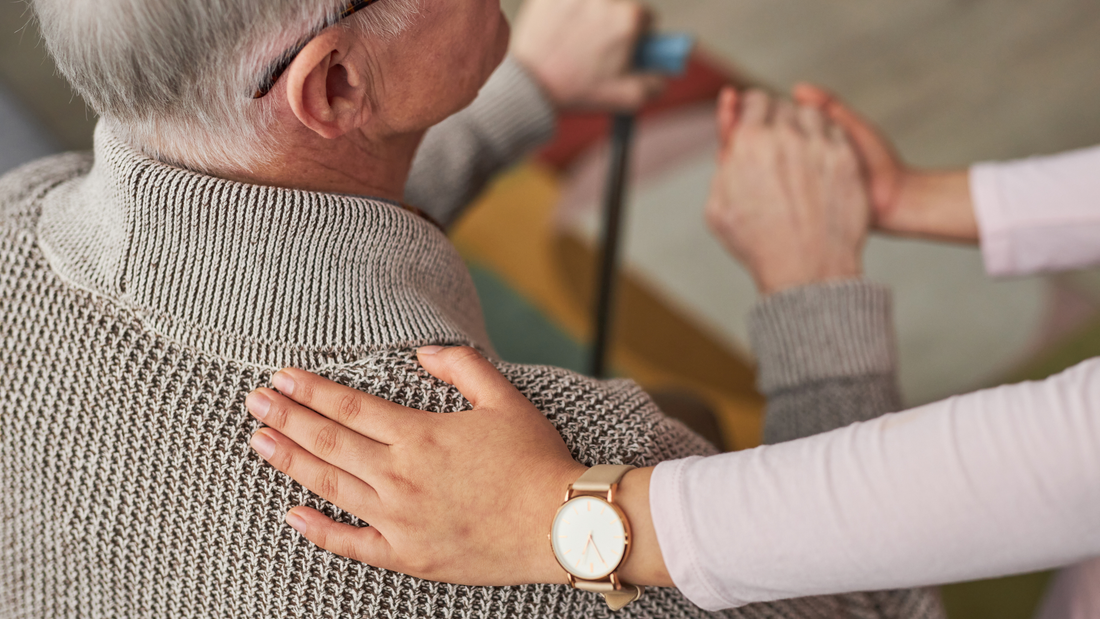
An emergency call bracelet can provide quick help in an emergency. At the same time, there are other measures that can help to reduce the risk of accidents in everyday life and create more safety.
1. Regular exercise and balance training
Exercise plays an important role in stability and coordination. Even light exercises can help to improve muscle strength and balance. Walks, light strength training, or special balance exercises can help reduce the risk of falls in everyday life.
2. Reduce tripping hazards at home
Many falls happen in one's own home. Therefore, it is worthwhile to regularly check the home for possible sources of danger. Typical tripping hazards include loose carpets, cables on the floor, or poorly lit hallways. Non-slip mats in the bathroom or sturdy handrails on stairs can also significantly increase safety.
3. Regular health checks
Dizziness, vision problems, or side effects of medication can increase the risk of falls. Regular doctor's visits help to identify such causes early. A check of vision or medication can also be useful.
4. Define emergency contacts
It is helpful if relatives or trusted persons can be reached quickly in an emergency. Many emergency call systems allow several contacts to be stored, which can be informed automatically. In an emergency, support can thus be organized quickly.
5. Use technical support
Technical solutions can offer an additional safety net. A mobile emergency call system allows help to be called at the push of a button in an emergency – both at home and on the go. Systems with automatic fall detection can even trigger an alarm themselves if the emergency call cannot be actively pressed.
Conclusion
An emergency alert bracelet for seniors can be an important support in everyday life. It enables quick help in an emergency and gives many people a reassuring feeling of security. Especially for older people who live alone or wish for more security, such a system can help to maintain independence longer.
Ultimately, it's not just about technology. It's about making everyday life safe without losing freedom.
FAQ/Frequently Asked Questions
How does an emergency alert bracelet for seniors work?
An emergency call bracelet is usually worn like a watch on the wrist. In an emergency, an alarm can be triggered by pressing a button. Depending on the system, stored emergency contacts or an emergency call center are then informed and organize help. Many modern devices work via mobile communications and can therefore also be used outside the home.
When is an emergency alert bracelet useful?
An emergency alert bracelet can be useful if older people live alone or have health conditions that increase the risk of emergencies. Especially after a first fall or with balance problems, many families decide on an emergency call system as an additional safeguard.
What happens when the emergency call is triggered?
If the emergency button is pressed, a connection is automatically established. Depending on the system, relatives can be informed or an emergency call center can contact the user directly via the device. If necessary, help is then organized or an emergency service is alerted.
Does automatic fall detection really help?
Automatic fall detection can be helpful in certain situations. Sensors detect typical fall movement patterns and can automatically trigger an alarm if no further movement is registered afterwards. This can be particularly important if those affected can no longer press the emergency call button themselves.
Does the long-term care insurance cover an emergency call bracelet?
Under certain conditions, the long-term care insurance fund may subsidize an emergency call system. The prerequisite is usually at least care level 1 and a situation in which help cannot be obtained quickly enough by oneself in an emergency. The monthly fees for the emergency call service are often covered.
"Two years ago, I tripped in the hallway one morning. Nothing dramatic, really – but I quickly realized I couldn't just get up again. That's when it dawned on me how uncomfortable it is when there's nobody right there. Afterwards, my daughter suggested an emergency alert bracelet. I was skeptical at first, but today I feel much safer with it. I go for walks more often again and know that in an emergency, help is just a button press away."