Don't forget to drink: Simple drinking triggers throughout the day

Drinking enough is one of the basics – and yet it's surprisingly often forgotten. The day is full, you're busy, and the feeling of thirst comes late or not at all. In the evening, the feeling remains: somehow, not enough water was consumed today. Yet regular drinking directly affects concentration, circulation, and well-being.
The good news: You don't need complicated plans or apps. A few simple drinking triggers are enough to firmly integrate drinking into your daily routine – unobtrusively, realistically, and permanently.
Why regular drinking is so important
The human body is composed of about 50–60 percent water, which is involved in almost all metabolic processes. Even a slight lack of fluids can affect concentration, reaction time, and circulation. Studies show that a deficit of just 1–2 percent of body weight due to fluid loss can lead to fatigue, headaches, and dizziness. With increasing age, the natural sensation of thirst also diminishes, while the fluid requirement remains the same. This increases the risk of unknowingly drinking too little – especially on warm days or during physical activity.
How much fluid the body really needs
As a general guideline, about 1.5 to 2 liters of fluid per day are recommended, although individual needs depend on factors such as body weight, exercise, ambient temperature, and diet. Fluids from water and unsweetened teas are particularly suitable as they do not put additional strain on the body. Coffee and alcohol only count to a limited extent towards the fluid balance, as they can have a dehydrating effect. Not only the quantity is crucial, but also the distribution: Water drunk consistently throughout the day is better absorbed by the body than large amounts all at once.
What happens in the body when you don't drink enough
If the body is supplied with too little fluid over a longer period of time, the circulating blood volume decreases. The blood becomes thicker, blood pressure can drop, and the brain is temporarily supplied with less blood. Especially when standing up or walking, this can lead to dizziness, lightheadedness, or unsteadiness. Kidney function is also directly affected, as the kidneys are responsible for regulating fluid balance. In older people, whose circulatory regulation is often less stable, this mechanism increases the risk of balance disorders, falls, confusion, or reduced performance in everyday life. Regular drinking has a preventive and stabilizing effect here.
Insufficient fluid intake can cause dizziness, which impairs balance and promotes falls – in such situations, an emergency call system like the Gardia emergency call wristband with automatic fall detection can offer additional safety. Thanks to automatic fall detection, help is automatically alerted in the event of a fall, even if the affected person is no longer able to actively trigger an emergency call.
Security that just runs
The Gardia emergency wristband discreetly accompanies you through everyday life and ensures that help arrives quickly in an emergency.

Why Drinking Goes Unnoticed in Everyday Life
Many people don't drink too little because they don't know they should – but because daily life is faster than their habits.
Typical reasons:
- The natural sensation of thirst sets in late
- Drinking doesn't have a fixed place in the daily routine
- Water isn't visibly available
- "I'll do that later" turns into "not today"
Especially for older people, the sensation of thirst diminishes. This makes fixed triggers that function independently of feeling all the more important.
Mini-Checklist: Making Drinking Easier
- Light bottle or glass, easy to grip
- Fixed place in every room
- Clear daily structure instead of quantity stress
- Keep an overview (e.g., with a drinking tracker)
- Consider everyday safety

Simple Drink Triggers That Really Work
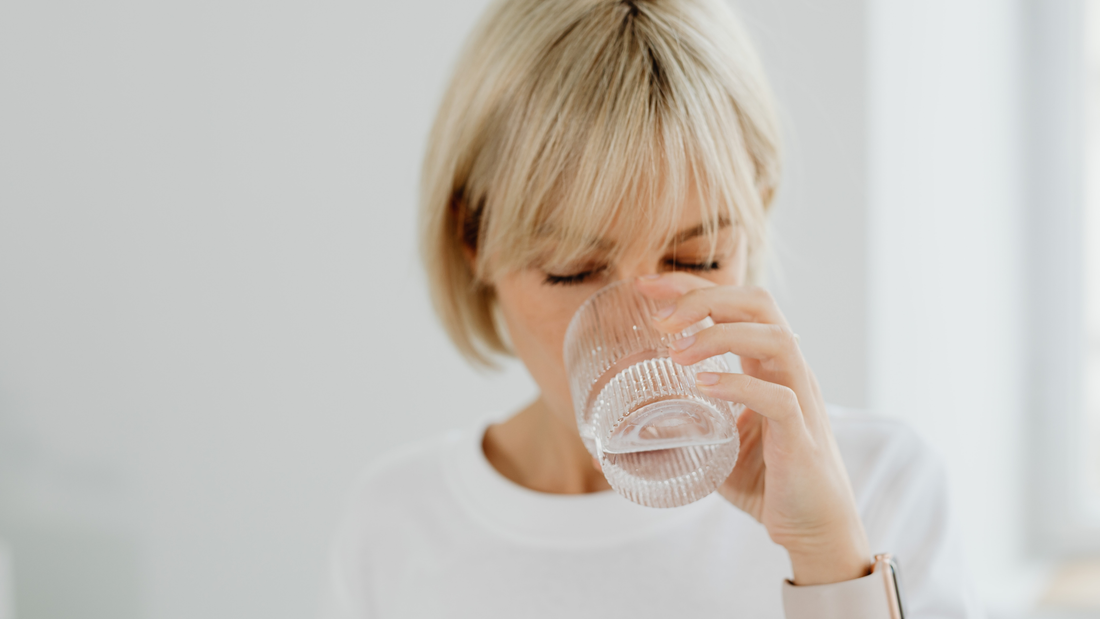
1. Link drinking to existing routines
Anything you already do daily can serve as a reminder:
- after waking up → 1 glass of water
- before each meal → 1 glass
- after using the toilet → a few sips
These associations are effective because they don't require additional thought.
2. Visibility beats motivation
What you see, you use:
- glass or bottle always at eye level
- not in the cupboard, but on the table
- a fixed drinking spot in every room
The easier the access, the more frequently you drink.
3. Small quantities instead of big goals
"2 liters a day" can quickly seem daunting. Better:
- one glass per hour
- one glass per section (morning, noon, afternoon)
Many small successes are more motivating than one big goal.
4. Gently vary the taste
Water can have variety – without sugar:
- lemon or orange slices
- cucumber or mint
- unsweetened herbal teas, warm or cold
This keeps drinking pleasant, even throughout the day.
5. Gentle reminders instead of constant alarms
If you use technology, use it sparingly:
- fixed times
- quiet reminders
- clear daily structure
Drinking should support, not stress.
Conclusion
Regular hydration is a quiet yet powerful form of health prevention. Those who understand why the body relies on fluids and how a deficiency affects it quickly recognize the value of small daily routines. Drinking triggers and simple aids like a hydration tracker create structure without building pressure. In combination with a good sense of security – for example, through supportive everyday solutions – this leads to more stability, independence, and serenity in daily life.
FAQ/Frequently Asked Questions
How much should I drink?
General rule: 1.5–2 liters daily, depending on activity and temperature.
Does coffee count?
Partially. Water and unsweetened teas are better.
I keep forgetting it anyway – what should I do?
Simplify triggers. Fewer goals, more routine.
Why is drinking so important in old age?
It supports circulation, concentration, and reduces the risk of falls.
What does safety have to do with drinking?
Dehydration can cause dizziness. Those who take precautions and extra safeguards will move more comfortably.
"I often felt dizzy, and sometimes I just had an uneasy feeling because I didn't know how safe I truly was. Since I started wearing the Gardia emergency wristband, I go through my daily life much more calmly. I know that help will come in an emergency – and that gives me a sense of security."