Bathroom Safety: An Underestimated Danger in Old Age

Why the bathroom poses particular risks in old age
The bathroom is one of the most important rooms in daily life – and at the same time one of the most dangerous, especially for older people. Slippery floors, wetness, limited mobility, or dizziness can quickly lead to falls. Many accidents in old age do not happen outdoors, but in one's own home – often precisely here. It is all the more important to address the issue of bathroom safety and to take precautions early.
But why is the bathroom particularly risky, and what can one specifically do to reduce the danger?
Why the bathroom is a high-risk area
Especially in old age, strength, balance, and reaction time change. Movements that were once taken for granted can become uncertain. In addition, there are external factors:
-
Slippery Surfaces: Tiles and moisture significantly increase the risk of falls, especially when getting in and out of the shower or bathtub.
-
Restricted Movements: Turning, bending, or standing up often occurs in confined spaces – this makes it difficult to catch oneself when feeling unsteady.
-
Temperature Changes: Warm showers can trigger circulatory problems or dizziness.
- Being Alone: Many seniors use the bathroom alone. In an emergency, quick help is often unavailable.
Typical Causes of Accidents in the Bathroom
- Slipping on wet tiles
- Tripping over bath mats or edges
- Unsafe entry and exit from the bathtub
- Getting up from the toilet without support
- Feeling weak or dizzy after showering
These situations are everyday occurrences – and are therefore often underestimated.
Safety – even in the bathroom
Especially in rooms with an increased risk of falling, additional precautions can be useful. The Gardia emergency wristband with integrated fall detection can also be worn in the bathroom and automatically alerts for help in an emergency.


What Does a Senior-Friendly Bathroom Cost?
Approximate costs in Germany:
- Grab bars: €30–100 per piece
- Non-slip mats: €20–50
- Shower seat (foldable): €100–300
- Raised toilet or toilet seat riser: €50–200
- Walk-in shower (conversion): €3,000–6,000
- Completely barrier-free bathroom: €8,000–15,000
Under certain conditions, the long-term care insurance fund can cover up to €4,000 for home environment improvement measures.
Renovate or supplement – what makes sense?
A complete bathroom renovation is not always necessary. Often, minor adjustments such as grab bars, a shower stool, or non-slip mats are sufficient to significantly increase safety. Especially in rented apartments, mobile solutions are a good alternative.
Despite all precautions, accidents cannot be completely avoided. Some seniors therefore also opt for an emergency call wristband that can also be worn in the bathroom. Especially in the event of an unexpected fall, it can be helpful to wear an emergency call wristband as a precautionary measure, such as the Gardia emergency call wristband with integrated fall detection, which can also be used in the bathroom and automatically alerts help in an emergency.
Over half of all falls in the home occur in or near the bathroom. Even small adjustments can significantly reduce the risk.

Measures for more safety in the bathroom
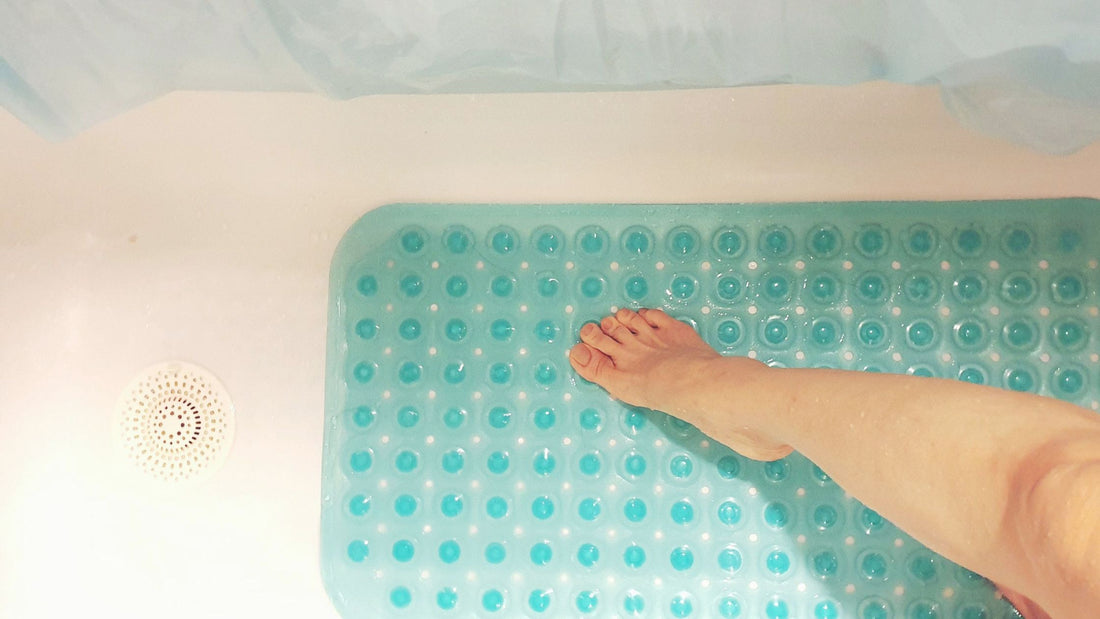
-
Improve slip resistance:
Non-slip mats in the shower, bathtub, and in front of the sink can significantly reduce the risk.
-
Install grab bars:
Grab bars in the shower, bathtub, and by the toilet make it easier to support yourself and stand up.
-
Use a walk-in shower:
A level-entry shower significantly reduces the risk of falls and makes entry easier.
-
Shower seat or shower stool:
Enables safe showering while seated, especially with limited strength.
-
Good lighting:
Sufficient, glare-free lighting helps to spot obstacles in time.
Why do so many falls happen in the bathroom?
The bathroom combines several risk factors: slippery tiles, wetness, confined movements, and frequent standing up or turning around. In old age, balance problems, reduced strength, or circulatory fluctuations are added. This significantly increases the risk of falling here more than in other living spaces.
Are small measures enough or do you need a fully accessible bathroom right away?
In many cases, small adjustments are enough to significantly increase safety. Non-slip mats, grab bars, or a shower stool can considerably reduce the risk. A complete barrier-free conversion is particularly useful when mobility is severely restricted or planned for the long term.
What measures provide the greatest safety improvement in the bathroom?
Especially effective are:
non-slip mats in the shower and bathtub
permanently installed grab bars in the shower and next to the toilet
good, glare-free lighting
a walk-in shower or a safe entry
These measures significantly reduce the most common causes of accidents.
Can an emergency call bracelet also be worn in the bathroom?
Yes, many modern emergency call bracelets are waterproof and suitable for use in the bathroom. Especially there, where falls are particularly common and help is often not immediately available, an emergency call system can be a useful addition to structural precautions.
At what age should one be concerned about safety in the bathroom?
Bathroom safety is not a question of a certain age, but of prevention. Even minor uncertainties, dizziness or restricted mobility are good reasons to address the issue early on. Those who act in time can avoid accidents and remain independent longer.
Conclusion: Small Changes, Big Impact
The bathroom is a central place in everyday life and deserves special attention. Many risks can be reduced with manageable measures. Those who plan early not only gain safety but also more independence and confidence in their own home.
How the Gardia app works in everyday life
The Gardia app allows relatives to be informed quickly in an emergency. Location transmission, notifications, and a simple overview ensure greater security – without unnecessarily complicating everyday life.