Hiking in Old Age: How to Stay Safe and Relaxed on the Trail

For many people, hiking is one of the most beautiful ways to stay active and spend time in nature. Exercise in the fresh air supports the cardiovascular system, strengthens muscles and joints, and helps many people to remain mobile and independent for longer. Especially in old age, however, one's own body awareness often changes. Paths that used to seem easy suddenly feel more strenuous. Some people need more frequent breaks, feel less secure on uneven ground, or notice that longer distances require more effort than before. However, this does not mean that you should give up hiking or walking. Often, small adjustments are enough to continue to be out and about safely and relaxed.
Why Hiking Is So Good for You in Old Age
Regular exercise is one of the most important factors for maintaining mobility and quality of life for as long as possible. Hiking combines several positive effects.
Hiking can help, among other things, to:
- support circulation and blood flow
- strengthen muscles and joints
- improve balance
- reduce stress
- improve endurance
- increase overall well-being
Many people also feel more balanced and active in their daily lives after regular exercise. The World Health Organization also recommends regular physical activity.
Don't take on too much at once
Many people want to pick up where they left off when hiking. However, this often leads to underestimating routes. It is therefore helpful to start slowly and gradually increase the intensity.
Especially pleasant are often:
- shorter routes
- quiet trails
- few ascents
- regular breaks
- leisurely pace
A good reference point is often your breathing. If you can still converse comfortably while walking, the pace usually matches your own fitness level well.
Safe hiking on the trail
The Gardia emergency wristband accompanies you at home and on the go, ensuring quick help in an emergency. Automatic fall detection and GPS tracking provide additional security, especially during walks, hikes, or longer trips outside the home.

Why many people plan hikes differently today than in the past
With increasing age, not only resilience but also the feeling of safety while on the go often changes.
Many older people are now more consciously looking for:
- Seating options
- Toilets along the way
- Shaded paths
- Rest stops
- Quiet routes
- Mobile phone reception
- Companionship
This does not mean being less active. Many people simply enjoy excursions more relaxed and without time pressure today.
Useful apps for walks and hikes
Many people now use apps to plan walks and hikes more easily.
Particularly popular are:
-
Komoot
-
Outdooractive
-
bergfex
-
AllTrails
- Google Maps
Many apps show, among other things:
- Route length
- Ascents
- Path conditions
- Estimated walking times
- Rest stops
- Quiet paths
Well-known and easily plannable routes, in particular, help many people feel safer outdoors.

What gives many people security on the go
Many older people want to remain active and enjoy walks or hikes without constantly having to worry. However, uncertainty often arises, especially on longer routes or in quieter areas. Therefore, many people today are more consciously looking for things that provide safety and orientation while on the go.
These include, for example:
- familiar and well-plannable routes
- regular breaks
- seating along the way
- charged cell phones
- emergency contacts
- accompaniment for longer distances
Additional safety solutions are also playing a greater role for many people. The Gardia emergency call bracelet accompanies people at home and on the go and ensures that help can be reached quickly in an emergency. Users can request help at the touch of a button. In addition, the automatic fall detection automatically recognizes severe falls even when those affected can no longer react themselves. Especially during walks, hikes or excursions, many older people find this additional security reassuring. For many, this means not only more protection on the go, but also more confidence to remain independently active.
Which shoes are often more comfortable for hiking
Many older people first notice discomfort in their feet or knees when hiking if their shoes don't fit properly. Especially on uneven paths, poor footwear can quickly lead to insecurity or exhaustion.
Many people feel more comfortable with:
- sturdy hiking boots with good support
- non-slip soles
- lighter shoes instead of heavy mountain boots
- soft insoles
- shoes with a wider fit
Especially for longer walks, it can also help to break in new shoes on shorter paths first, instead of wearing them directly on longer tours.
Trekking poles are often underestimated
Many people initially think that hiking poles are only useful for challenging tours. In fact, they help many older people even on simple paths. Hiking poles can help:
- stabilize balance
- relieve knees and joints
- reduce uncertainty on uneven paths
- walk downhill more safely
Especially on longer routes, many people find hiking poles a noticeable relief.
Why heat and sun are often underestimated when hiking
Especially in spring and summer, many people underestimate how strenuous heat can be when hiking. Older people, in particular, often notice dehydration or circulatory problems later than younger people.
Helpful tips include:
- starting earlier in the morning
- taking regular breaks in the shade
- always carrying water
- wearing light clothing
- avoiding long distances in extreme heat
Why many people prefer to hike together
Many older people feel much more relaxed when accompanied, especially on longer journeys or in unfamiliar regions. Shared walks help many people to:
- stay more motivated
- feel more secure
- make breaks more relaxing
- cultivate social contacts
- experience more joy in exercise
Meanwhile, there are also many group offers or apps for shared walks and hikes.
Popular options include:
- Meet5
- nebenan.de
- Hiking groups of local clubs
- Guided senior groups
Taking the Body's Warning Signs Seriously
Especially when hiking, warning signs should not be ignored. These include, for example:
- severe dizziness
- unusual exhaustion
- shortness of breath
- unsteadiness when walking
- chest pain
- problems with balance or vision
If symptoms occur more frequently or worsen, they should be medically clarified.

What really helps many older people when hiking
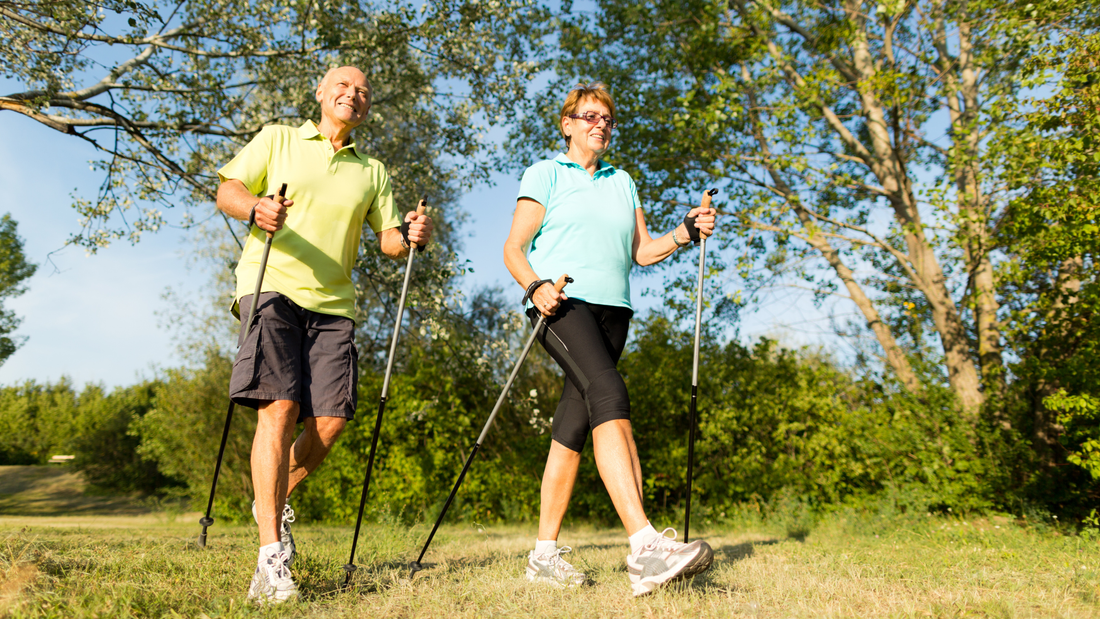
Many older people want to remain active in their later years and continue to enjoy walks and hikes. At the same time, resilience, balance, and walking safety often subtly change. However, even small adjustments can help them feel more relaxed and secure when out and about.
1. Start with short distances
Many people feel safer if they initially choose quiet and shorter routes. Regular breaks and an adjusted pace help to avoid overexerting the body.
2. Plan routes in advance
Well-planned routes often provide more security when out and about. Many people now consciously look for seating options, inclines, or quiet paths. Apps like Komoot, Outdooractive, or Google Maps can be helpful here.
3. Take warning signs seriously
Dizziness, severe exhaustion, or uncertainty while walking should not be ignored. Especially when hiking, it is important to listen to your body and adjust exertion in good time.
4. Use good shoes and walking poles
Non-slip shoes and stable footing help many people walk more safely. Walking poles also provide additional stability and relieve stress on knees and joints, especially on uneven paths.
5. Don't underestimate safety when out and about
Many older people want to remain independent while also knowing that help can be reached quickly in an emergency. The Gardia emergency call bracelet provides additional safety at home and on the go, enabling quick help at the touch of a button or automatically through integrated fall detection.
Conclusion
Hiking in old age can strengthen body and mind, helping many people stay active and mobile. At the same time, it's worth paying more attention to exertion, safety, and recovery. Often, even small changes can help you hike more relaxed and safely. Because it's not about performance or speed, but rather the joy of movement and beautiful moments outdoors.
FAQ / Frequently Asked Questions
Is hiking healthy in old age?
Yes. Regular exercise supports circulation, muscles, balance, and well-being, and helps many people to remain mobile for longer.
How far should seniors hike?
That depends on fitness, health, and experience. Many people feel more comfortable with shorter and quieter routes.
Which shoes are suitable for hiking in old age?
The most important things are non-slip soles, a stable grip, and a comfortable fit.
Why are trekking poles helpful?
Hiking poles provide additional stability and relieve stress on knees and joints, especially on uneven paths or downhill.
How can Gardia help with hiking?
The Gardia emergency wristband enables quick help at the touch of a button and provides additional safety on the go through automatic fall detection.
"I used to always want to run as far as possible. Today, I especially enjoy being active outdoors and consciously take more time for myself. Since I've been wearing the Gardia emergency wristband, I feel much more relaxed when I'm out and about."