Senior has fallen: What to do? First aid and emergency guide
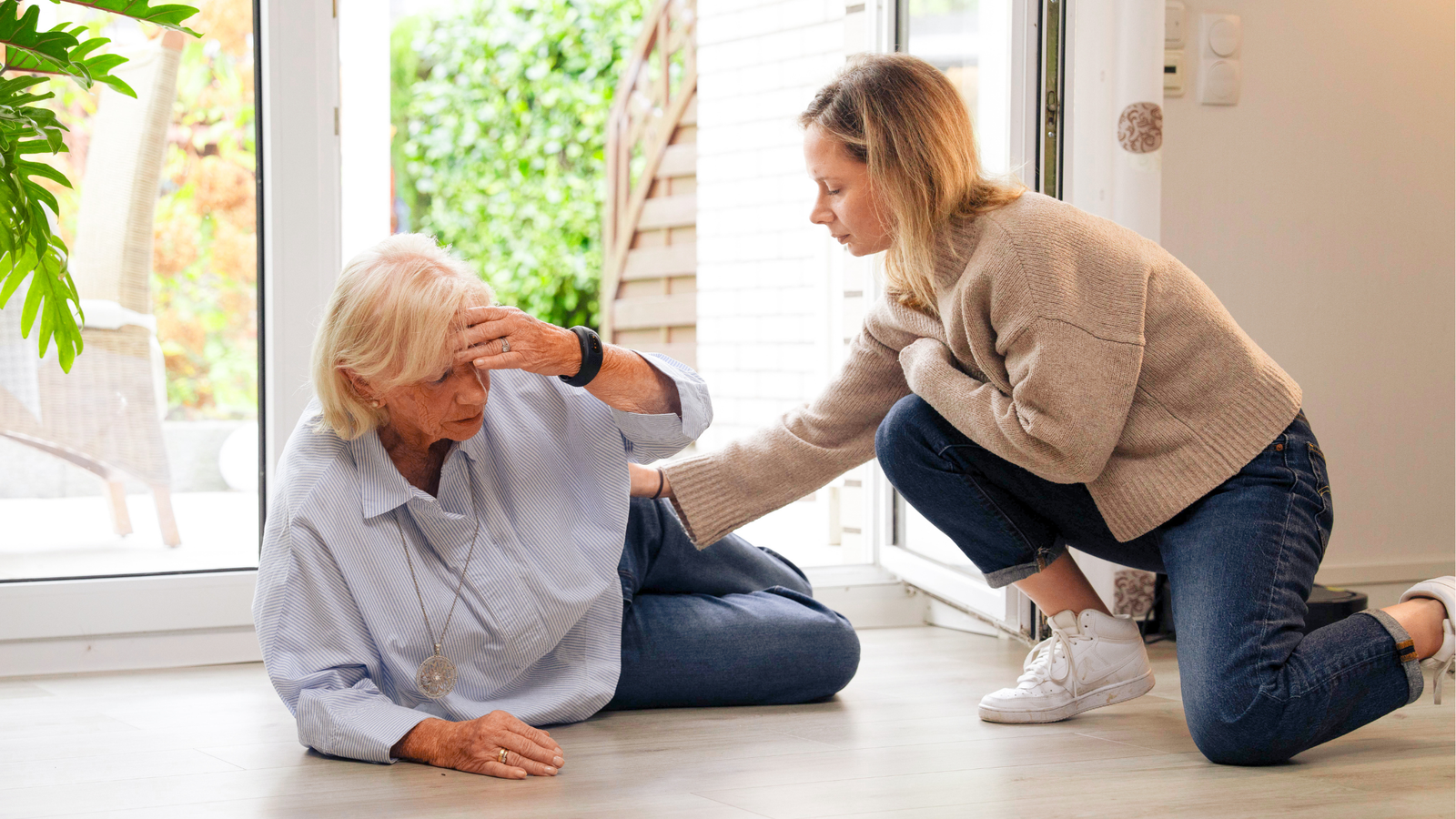
A fall can quickly become a serious emergency for elderly people. It is particularly dangerous if the affected person can no longer get up on their own, the telephone is out of reach, or injuries initially go unnoticed. Even without visible wounds, fractures, head injuries, or internal bleeding can be present. Therefore, it is important to remain calm, check for consciousness and breathing, and not prematurely lift the person. This article shows step-by-step what to do after a fall, when to call 112, and how an emergency wristband with automatic fall detection can help organize support more quickly.
Key facts at a glance
- Do not rush to sit up: In cases of severe pain, a possible head injury, or suspected bone fracture, the fallen person should be moved as little as possible.
- When in doubt, call 112: Unconsciousness, shortness of breath, severe pain, heavy bleeding, confusion, or visible deformities are reasons for an immediate emergency call.
- Avoid prolonged lying down: If a person cannot make themselves known after a fall, there is a risk of hypothermia, dehydration, pressure sores, and other health complications.
Important note: This article does not replace a first aid course or medical advice. In cases of uncertainty or a potentially serious emergency, the emergency services should be contacted at 112.
Security right on your wrist

Step-by-Step Guide: What to do immediately after a fall?
1. Stay calm and secure the area
Approach the fallen person calmly and speak to them clearly. Remove immediate hazards without endangering yourself – for example, objects lying around, water on the floor, or active electrical devices.
First, ask:
- Can you hear me?
- Do you know what happened?
- Where do you have pain?
- Did you hit your head?
- Can you move your arms and legs?
- Are you dizzy or nauseous?
Also try to find out whether the person fell due to an obstacle or whether dizziness, unconsciousness, heart problems, or a stroke may have caused the fall.
2. Check for consciousness and breathing
If the person is unresponsive, check if they are breathing normally. If they are breathing normally, place them in the recovery position – provided there are no obvious injuries preventing this – and call the emergency services. Stay with them, monitor their breathing regularly, and keep them warm.
If the person is not breathing normally, immediately call 112 and begin resuscitation. The control center can guide you by phone. The German Red Cross recommends, among other things, the recovery position, calling emergency services, and maintaining warmth for an unconscious person who is breathing normally.
3. Look for Injuries and Warning Signs

Check for visible injuries without unnecessarily moving arms or legs. Of particular concern are:
- severe pain in the hip, pelvis, thigh, or back
- a shortened or unnaturally rotated leg position
- visible deformities
- severe or unstoppable bleeding
- open wounds or visible bone
- scalp wounds or swelling on the head
- memory gaps, grogginess, or increasing fatigue
- nausea or vomiting
- sudden speech impediments or paralysis
- shortness of breath, chest pain, or cold sweats
4. Dial emergency number or trigger emergency system
Call 112 if a serious injury cannot be ruled out, or if the person, for example:
- is unconscious or only partially responsive
- is not breathing normally
- is in severe pain
- appears severely confused
- has hit their head and shows neurological abnormalities
- cannot stand up
- may have suffered a broken bone
- is bleeding heavily
- shows symptoms of a stroke or heart attack
In Germany, the emergency number 112 can be reached 24/7, free of charge, and without a pre-dial code. It is intended for situations where there is a danger to life or permanent health damage cannot be ruled out. When speaking with the control center, first state the emergency location as precisely as possible. Then describe what happened and how the affected person is doing. Do not hang up on your own; instead, wait for further questions and follow the control center's instructions. If the person is wearing an emergency bracelet or a mobile emergency system, the emergency button can also be pressed. Depending on the configured system, relatives, a stored contact person, or an emergency call center will be alerted.
5. Do not lift the person abruptly
The understandable first impulse is often: "Let me help you up quickly." However, this can be dangerous.
Do not lift the person, especially if they:
- express severe pain
- have hit their head
- cannot remember the fall
- complain of pain in the hip, pelvis, or back
- cannot bear weight on a leg
- show a visible deformity
- appear unusually drowsy, confused, or pale
Even if there are no external injuries, fractures, internal injuries, or a concussion can be present. Only if the person is fully responsive, has no pain or warning signs, and expressly wants to get up, can they be supported slowly and gradually. If dizziness, pain, or uncertainty occur during this process, the attempt should be stopped immediately.
6. First Aid and Keeping Warm
Stay with the person until help arrives and speak to them reassuringly. Cover them with a blanket, jacket, or towel. Avoid unnecessary movements and position injured body parts as comfortably as possible. Open wounds can be carefully covered with a clean or sterile wound dressing. In the event of a potentially severe fall, do not give anything to eat or drink initially. This could be relevant if surgery or an examination under anesthesia is required. If in doubt, follow the instructions from the control center.
When to call an ambulance?
An ambulance or emergency medical care is particularly necessary if there is a risk to life or a serious injury is possible.
Immediately dial 112 for:
- Unconsciousness
- Absent or irregular breathing
- Severe shortness of breath
- Severe or increasing pain
- Severe bleeding
- Visible deformities
- Suspected hip, pelvic, spinal, or thigh fracture
- Seizures
- Severe confusion
- Speech disorders or one-sided paralysis
- Chest pain, cold sweats, or significant weakness
- Head injury with vomiting, dazedness, or memory loss
- A fall from a significant height
- Long, unknown lying duration
If there is no immediate danger to life, but a timely medical assessment is necessary, the on-call medical service can be contacted at 116117 outside of regular practice hours. However, for severe complaints or uncertainty, 112 should always be dialed.

The Unnoticed Danger: "Long Lying"
A long-lie trauma refers to health damages that can occur when a person lies immobile on the floor for an extended period after a fall or medical event. The problem affects not only people with severe fall injuries. Some seniors cannot get up independently despite relatively minor injuries. Others cannot reach their phone or are too weak to call loudly for help.
Why is prolonged lying so dangerous?
The longer a person lies immobile on a hard or cold surface, the greater the risk of:
- Hypothermia
- Dehydration or fluid deficiency
- Pressure sores and tissue damage
- Muscle breakdown
- Circulatory problems
- Kidney dysfunction
- Worsening of existing illnesses
- Anxiety, confusion, and psychological distress
A clinical study on patients with long-lie trauma describes, among other things, fluid deficiency, severe hypothermia, muscle breakdown, and acute kidney dysfunction as relevant accompanying complications. Therefore, it is crucial not only to detect the fall itself. It is equally important to determine as quickly as possible that a person can no longer free themselves from their situation under their own power.
Connected in case of emergency

A digital emergency chain can help quickly
A mobile emergency call system is a portable aid that allows a person in an emergency to request help via a button or - depending on the device - via automatic fall detection.
A digital emergency chain can, for example, proceed as follows:
- A sensor registers a possible fall.
- The system triggers an alarm or requests confirmation.
- Stored contacts or an emergency call center are informed.
- The location of the affected person is transmitted, provided a localization function is activated and available.
- An attempt is made to establish contact via voice connection.
- Depending on the situation, relatives, caregivers or the emergency services are notified.
Especially for seniors living alone, automatic fall detection can save valuable time. It can also trigger an alarm even if the person is no longer able to press the emergency call button themselves after a fall. However, automatic detection does not offer one hundred percent security. Not every fall is reliably detected, and abrupt everyday movements can cause a false alarm depending on the technology. A manually accessible emergency call button and a clear personal emergency plan therefore remain important. With a mobile emergency call system such as the Gardia emergency wristband, support can be available not only within one's own home, but also on the go - for example, during a walk, while shopping, or in the garden. For the emergency chain to work, the device should be worn regularly, charged, and the stored emergency contacts kept up-to-date.
When should you see a doctor despite having no wounds?
Not every injury is externally visible. Especially in older people, initially inconspicuous complaints may only become more apparent hours after a fall.
A medical examination is advisable if:
- pain persists or increases after the fall
- the person walks less confidently than before
- dizziness or balance disorders occur
- the head has been hit
- memory gaps exist
- nausea, vomiting, or unusual fatigue occur
- new confusion or behavioral changes are noticed
- the person appears pale, weak, or clammy
- abdominal, chest, or back pain occurs
- a joint swells or can barely be moved
- the person is taking blood-thinning medication
Special caution with blood thinners
Anticoagulant medications reduce the body's ability to form blood clots. This can make bleeding more severe or cause it to be noticed with a delay. Therefore, after a fall on the head, special attention should be paid when taking blood thinners, and medical advice should be sought early – even if no clear wound is visible initially. In case of drowsiness, increasing headaches, vomiting, paralysis, or disturbances of consciousness, dial 112 immediately

Checklist: Fall Emergency Preparation
Good preparation makes it easier for relatives, neighbors, and first responders to react correctly in an emergency.
Important Emergency Numbers
- Emergency services and fire brigade: 112
- On-call medical service: 116117
- General practitioner's office
- Relatives or trusted persons
- Nursing service
- Responsible emergency call center
Medical Information
- full name and date of birth
- known illnesses
- allergies
- current medication list
- note on blood thinners
- implants, pacemakers, or prostheses
- name and contact details of the general practitioner's office
- insurance data
- existing living will or power of attorney for healthcare
Practical Preparation at Home
- deposit emergency information in a clearly visible place
- remove tripping hazards and loose carpets
- adequately illuminate paths and stairs
- install grab bars in the bathroom
- store important items at an easily accessible height
- deposit a spare key with a trusted person or in a secure key depot
- regularly check that the mobile phone is charged and reachable
- wear an emergency call bracelet as permanently as possible
- regularly check the function and battery level of the emergency call system
- keep deposited contact persons up to date
Information for Relatives
Relatives should know:
- how an alarm is triggered
- who is contacted first in case of an alarm
- how to gain access to the apartment
- which medications are taken
- whether a localization or voice function is set up
- what health peculiarities exist
- when to independently notify 112
What happens if a fallen person can no longer press the emergency call button?
Should you immediately lift someone who has fallen?
When is a fall in seniors an emergency?
What is a crush injury?
How does automatic fall detection work?
Do you have to see a doctor after every fall?
"I always thought something like that would never happen to me. But after my fall, I suddenly lay on the floor and couldn't move. My phone was out of reach, and at that moment, I was most afraid that no one would notice me. When I heard my daughter's voice through the wristband, a huge tension fell away from me. She immediately knew something had happened and could organize help. For me, it wasn't just crucial that an alarm was triggered. What was crucial was the feeling of not being alone in that moment. Since then, I wear Gardia every day. It doesn't remind me of my insecurity, but of the fact that I can continue to live independently – with the knowledge that someone is there for me in an emergency."