Why you sleep worse in spring – and what really helps

Many people suddenly sleep worse in spring. They wake up more often at night, feel tired in the morning, and often don't know why. Longer days actually have a positive effect. But it is precisely these changes that disrupt the sleep rhythm. Even an hour more daylight in the evening can affect the internal clock and shift the natural sleep rhythm. Many people therefore get tired later in spring, even though they wake up earlier due to the daylight. This shortens the recuperation phase of sleep. To get back into a stable rhythm more quickly, fixed sleep times, as much daylight as possible in the morning, and less screen light in the evening help. Even an hour more daylight in the evening can affect the internal clock and shift the natural sleep rhythm. In the further course of the article, we show which processes in the body are behind this and with which simple measures you can specifically improve your sleep rhythm in spring.
How common are sleep problems in spring?
Around 30–40% of people notice changes in their sleep during this time. The elderly are particularly affected. The reason: the body adapts more slowly to new rhythms.
Why many sleep worse in spring
The most important influencing factor is the so-called circadian rhythm, the body's internal clock. It is primarily controlled by light.
In spring, these external conditions change significantly due to:
- longer days
- earlier sunrise
- more intense daylight
- later darkness
The body must first adapt to this new rhythm. During this transitional phase, shifts in the sleep-wake cycle can occur.
Hormonal Changes: Why Melatonin Suddenly Drops
A key reason for sleep problems in spring lies in hormone regulation. Melatonin, the so-called sleep hormone, is primarily produced in the dark and signals to the body that it's time to rest. Due to the longer and brighter days, this process changes:
- Melatonin production starts later
- Overall secretion is lower
- The sleep phase shifts later
You get less tired in the evening and have more difficulty falling asleep.
Serotonin – the activity hormone
Another important factor for sleep problems in spring is increased serotonin production. Serotonin, often referred to as the "happiness hormone," is stimulated by daylight and provides more energy, a better mood, and increased activity in everyday life. With the longer and brighter days, this process changes:
- Serotonin production is stimulated more strongly
- The body remains active and ready to perform for longer
- The natural transition into the resting phase is delayed
Vitamin D and Sleep: An Underestimated Connection
With more sunlight, the body starts producing more Vitamin D again. This vitamin plays a role not only in bone health but also in sleep, the immune system, and hormone balance. Especially after the winter months, many people have low Vitamin D levels. This can contribute to the following symptoms:
- persistent fatigue and exhaustion
- lower energy and lack of motivation
- increased susceptibility to infections
- concentration problems
poorer sleep quality
The transition in spring is made even more difficult by this.
Other Factors That Disrupt Sleep
External influences also play a role:
- Temperature
→ too warm = restless sleep. Ideal: 16–18 °C.
- Allergies
→ Pollen disturb breathing
- More activity
→ longer days = less rest
The body finds it harder to wind down in the evening.

When Sleep Problems Become a Risk
Short-term sleep problems are usually harmless. However, if they persist for longer, they can significantly affect daily life.
Typical consequences include:
- increased risk of falling
- concentration problems
- insecurity in daily life
- exhaustion and reduced reaction time
Especially at night or in the early morning hours when getting up, the risk of insecurity and falls increases. Fatigue, dizziness, or circulatory problems can cause movements to become slower and less stable. A mobile emergency call system like the Gardia emergency wristband can provide additional security in such situations. It allows you to quickly call for help in an emergency – at the push of a button or automatically through an integrated fall detection system. At the same time, stored contacts are informed or an emergency call center can optionally be integrated. This way, you are not alone even if you feel insecure.
Typical Signs of Sleep Problems in Spring
Sleep problems often develop gradually. Common indicators include:
- Difficulty falling asleep
- Frequent waking during the night
- Waking early due to light
- Restless sleep
- Fatigue despite sufficient sleep duration
- Concentration problems during the day
More security for restful nights
Sleep problems can lead to uncertainty and exhaustion in everyday life, especially at night or when getting up. The Gardia emergency wristband provides security in the background by ensuring that help is quickly available in an emergency. For a reassuring feeling, even on restless nights.

Why Sleep Problems Are More Noticeable in Old Age
As we age, sleep architecture changes.
Typical changes include:
- less deep sleep
- increased sensitivity to light
- decreased melatonin production
As a result, the body reacts more sensitively to external changes – such as the change of seasons.
Sleep better: Simple stretches for the evening
Light stretching exercises can help relax the body in the evening and ease the transition into sleep. Just a few minutes are enough to release tension and lower stress levels. It's important to perform the exercises calmly and without strain.
Simple exercises for the evening:
- Gently tilt your neck to the side
- Stretch your arms upwards and lengthen your back
- Loosely bend your upper body forward
- Gently stretch your legs and calves
- Consciously breathe deeply in and out
Even 5 to 10 minutes can help you fall asleep faster and sleep more soundly.

What really helps: Targeted improvement of sleep in spring
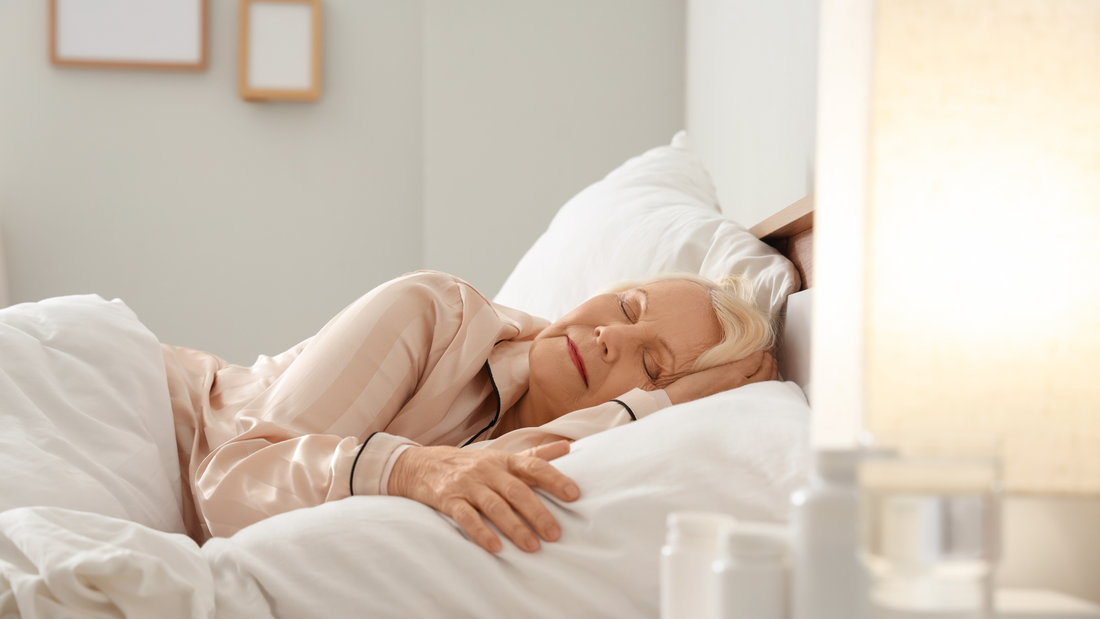
You can actively support these processes with targeted measures.
1. Specifically promote melatonin (crucial for falling asleep)
Melatonin is produced in darkness. In spring, it is often released too late.
This helps:
- consciously reduce light in the evening (especially mobile phone & TV)
- no bright screens 1 hour before bedtime
- keep the bedroom as dark as possible
Goal: Signal to your body early enough that it's time to sleep.
2. Utilize serotonin correctly (for energy during the day)
Serotonin increases with daylight and makes you active.
This helps:
- direct daylight in the morning (e.g., a walk)
- exercise in the morning or at noon
- stay active during the day
3. Build up vitamin D (for energy & sleep quality)
After winter, vitamin D levels are often low.
This specifically helps:
- 15–30 minutes outdoors daily
- expose face and hands to light
- regular outdoor exercise
4. Rebuild sleep pressure
Due to longer days, the natural tiredness in the evening is often missing.
This helps:
- no long naps during the day
- consciously wind down in the evening
- maintain fixed sleep times
5. Bring the body into "rest mode" in the evening
The transition from activity to sleep is often delayed in spring.
This helps:
- calm evening routine (reading, light exercise)
- consciously slow down
- reduce stimuli (light, noise, stress)
Conclusion
Sleep problems in spring are no coincidence. They arise from the interplay of changes in light, hormonal adjustments, and external factors such as temperature or allergies. In most cases, it is a temporary phase. With targeted measures, sleep can be stabilized – and thus everyday well-being significantly improved.
FAQ / Frequently Asked Questions
Why do I sleep worse in spring?
Above all, changing light conditions and hormonal changes influence the sleep-wake rhythm.
How long do spring sleep problems last?
Usually only a few days to a few weeks until the body has adapted.
Can vitamin deficiency affect sleep?
Yes, especially a vitamin D deficiency after winter can impair sleep quality. A lack of magnesium or vitamin B12 can also affect sleep and recovery.
What helps with sleep problems?
Fixed bedtimes, less light in the evening, and a calm routine often already provide noticeable relief.
Can the Gardia emergency wristband help with insecurity?
Indirectly, yes. Lack of sleep can lead to dizziness, unsteadiness, or an increased risk of falling – especially at night or when getting up. The Gardia emergency wristband can provide additional safety here, as help can be called quickly in an emergency – by pressing a button or automatically through fall detection.
"Nights gradually became more restless. I was often awake and uneasy when I had to get up. This small fear bothered me more than I realized. With the bracelet, that feeling has disappeared. I feel safe again – and that's noticeable in my sleep too."