Understanding Parkinson's – Balancing Movement, Daily Life, and Safety

A Parkinson's diagnosis changes a lot – often gradually, sometimes unexpectedly. Movements become slower, the body reacts differently, and everyday routines suddenly require more attention. However, Parkinson's does not mean losing control over one's daily life. With the right understanding, targeted measures, and small adjustments, quality of life can often be maintained for a long time.
What happens in the body with Parkinson's
Parkinson's is a neurological disease in which certain nerve cells in the brain gradually degenerate. These cells produce dopamine – a neurotransmitter responsible for motor control and coordination.
When dopamine levels drop, typical symptoms occur:
- slowed movements
- muscle rigidity
- tremors
- balance disorders
Early signs – what to look out for
Parkinson often begins insidiously and is therefore not always recognized immediately.
Typical early signs can include:
- slight tremor, often on one side
- smaller, slower movements
- changes in handwriting
- impaired sense of smell
- sleep disorders
- reduced facial expressions
Especially in the early phase, these changes are often underestimated.
Security everywhere
With increasing movement restrictions, the risk of falls in Parkinson's disease increases. The Gardia emergency call wristband provides quick help and automatic fall detection in an emergency.

Is Parkinson's Curable?
No – Parkinson is not currently curable.
However, the disease is now highly treatable.
Therapies aim to:
- Relieve symptoms
- Maintain mobility
- Improve quality of life
These include:
- Medication (e.g., L-Dopa)
- Physical therapy
- Occupational therapy
- Exercise and training
Many people live actively with Parkinson's for years or decades.
Why exercise plays a central role
Exercise is one of the most important measures in managing Parkinson's. It helps to maintain mobility, coordination, and muscle strength for as long as possible.
Particularly beneficial are:
- regular walks
- balance exercises
- light strength training
- fixed exercise routines
The key is not the intensity, but the regularity.
Fall risk in Parkinson's – often underestimated
Many falls are not the result of a single moment but rather the consequence of long-term developments in the body.
Typical causes include:
- balance disorders
- slowed reactions
- muscle atrophy
- sudden movement blockages ("freezing")

Emergency call systems – when they make sense
With Parkinson's, mobility changes gradually. Balance, reaction time, and coordination can decline over the course of the disease – which also increases the risk of falls.
When an emergency call wristband makes sense for Parkinson's
- for balance disorders or an unsteady gait
- during "freezing" moments (sudden movement blockages)
- after experiencing falls
- if affected individuals are often alone
- with advanced disease
Advantages in daily life with Parkinson's:
- quick alarming in an emergency
- automatic fall detection even without active triggering
- more security with sudden movement limitations
- relief for relatives
An emergency call system can be important support in daily life. Solutions like the Gardia emergency call wristband help to quickly call for help in an emergency – especially in situations where affected individuals can no longer react themselves.
Nutrition as a Supporting Factor
A balanced diet can also help stabilize everyday life:
- Protein for muscles
- Fiber for digestion
- Sufficient fluids
- Vitamins for metabolism
Important: Diet should be adjusted to medication.

Safely Navigating Daily Life with Parkinson's
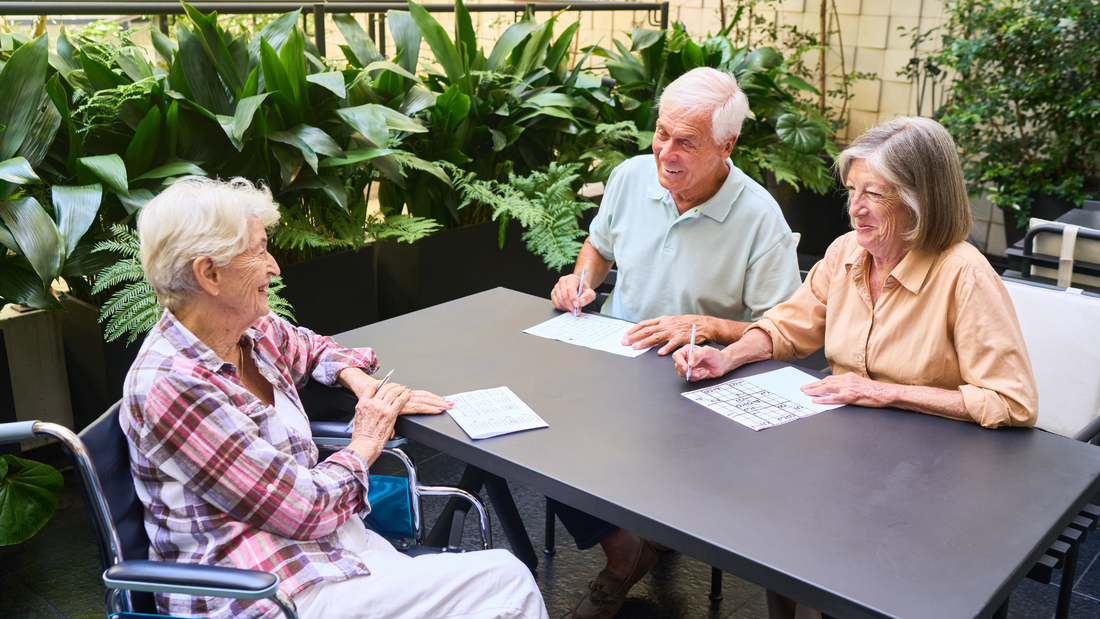
Managing Parkinson's in everyday life requires time, adaptation, and a better understanding of one's own needs. However, with targeted measures, a great deal of stability and independence can be maintained:
1. Better understanding your own body
Parkinson's progresses individually and changes over time. Those who are consciously aware of their own symptoms can better assess when rest, exercise, or support are necessary. This understanding helps to make everyday life more active and safer.
2. Integrate regular exercise
Exercise is a central component in managing Parkinson's. It supports coordination, balance, and muscle strength. Even small, regular units in everyday life can have a positive long-term effect.
3. Create fixed routines
Clear daily structures provide security and orientation. Recurring routines help to better coordinate movements and reduce uncertainties. Especially with increasing symptoms, structure becomes an important factor.
4. Consciously shape your environment
An adapted environment can reduce many risks in everyday life. This includes stable paths, sufficient light, and avoiding tripping hazards. Small changes can have a big impact on safety and independence.
5. Plan for support and safety
Even with an active lifestyle, not all risks can be avoided. Therefore, it can be useful to consider safety in everyday life. In addition to support from relatives, technical aids can also help. An emergency call bracelet with automatic fall detection allows for quick alarming in an emergency and ensures that help can be organized – even if you can no longer react yourself.
Conclusion
Parkinson changes everyday life – but it does not take away the ability to live an active and self-determined life. With exercise, an adapted diet, and a conscious approach to one's own limits, a lot of stability can be maintained. It is crucial to recognise changes early and adapt daily life accordingly. At the same time, it can be helpful to consider safety. Because knowing that you are not alone in an emergency creates confidence and enables you to shape your everyday life more freely again.
FAQ / Frequently Asked Questions
What are the first signs of Parkinson's?
Initial signs are often subtle changes such as slight tremors, slowed movements, altered handwriting, or reduced facial expressions. As the symptoms start insidiously, they are often initially overlooked.
Is Parkinson's hereditary?
In most cases, Parkinson's is not directly hereditary. While genetic factors can play a role, the disease usually develops through a combination of age, environment, and individual predisposition.
Why is the risk of falling increased in Parkinson's disease?
Impairments to balance, slowed reactions, and sudden blocks in movement can more easily lead to unsafe situations. Many of these changes develop insidiously and are therefore often underestimated.
Why is exercise particularly important for Parkinson's?
Regular exercise helps maintain mobility, balance, and muscle strength. It can help positively influence the course of symptoms and preserve independence in daily life for longer.
How does the fall detection work on the Gardia emergency call bracelet?
The Gardia emergency wristband automatically detects unusual movement patterns that indicate a fall using integrated sensors. If such a fall is detected, an alarm is automatically triggered and stored contacts are informed. In addition, help can be requested manually at any time by pressing a button.
"My mother never wanted us to worry. She lives alone, travels a lot, takes care of her garden, and always says she manages well. But after her fall two years ago, everything felt different to us. That 'what if...' was suddenly always there. Not loud – but constantly in the back of our minds. Since she started wearing the emergency call bracelet, that feeling has quieted down. She herself hardly thinks about it. But we know that in an emergency, she won't be alone. And that's exactly what makes all the difference to us."