Light Summer Fare: Eating in the Heat + 5 Recipes
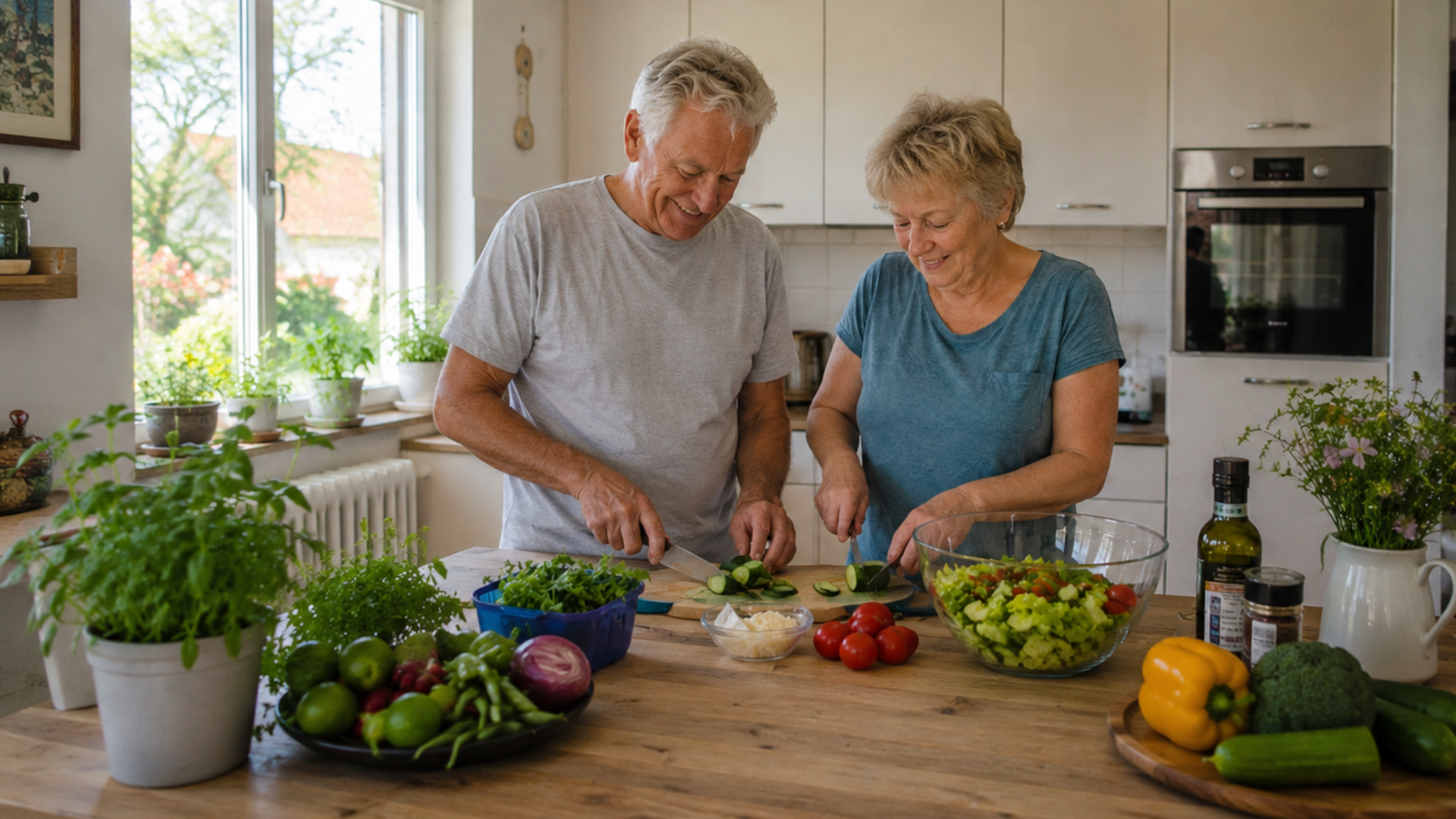
When temperatures rise, many people experience a decrease in appetite. Instead of warm, heavy meals, fresh and light dishes are often more pleasant on hot days. At the same time, the body loses more fluid through sweating. This makes it all the more important not only to eat a balanced diet in summer but also to drink regularly. But what should you eat and drink in the heat? Which foods are particularly suitable, what is rather unfavorable, and which light summer dishes can be prepared quickly? In this article, you will find practical tips and simple recipes for hot days.
Key facts at a glance
- Drinking regularly is particularly important in hot weather.
- Water, mineral water, and unsweetened herbal and fruit teas are good thirst quenchers.
- Water-rich fruits and vegetables can also provide fluids.
- Light meals with vegetables, fruit, whole grain products, and suitable protein sources are well-suited for hot days.
- Several smaller meals can be more pleasant than one very large portion.
- Alcohol and heavily sweetened drinks are not good thirst quenchers.
- Older people in particular should pay attention to regular drinking, as the feeling of thirst can diminish with age.
- For heart or kidney diseases, an individually determined fluid intake may be necessary.
Why does heat change our appetite?
On a cool winter day, a hearty, warm meal often seems much more appealing than at 30 degrees in the shade.
Many people automatically prefer the following in summer:
- smaller portions,
- fresh vegetables,
- fruit,
- salads,
- cold or lukewarm dishes,
- yogurt and other light dairy products,
- simple dishes with little preparation effort.
This is generally not a problem. What is crucial is that you continue to consume enough energy and nutrients even with less appetite. Especially if several hot days follow one another, your diet should therefore not consist exclusively of fruit or small snacks. Protein sources, whole grain products, and plant-based fats can also be part of a balanced summer diet.
What should you eat in hot weather?
For hot days, foods that are fresh, easy to combine, and rich in water are particularly suitable. These include, for example:
Vegetables
Especially water-rich varieties are:
- Cucumbers,
- Tomatoes,
- Zucchini,
- Leafy greens,
- Bell peppers,
- Radishes.
Vegetables can be easily used as salads, raw food, cold soups, or side dishes.
Fruits
Fruits can also contribute to fluid intake. In summer, for example, the following are suitable:
- Watermelon,
- Berries,
- Peaches,
- Nectarines,
- Apples,
- Apricots.
Fruits are great as a snack or with yogurt, quark, or oatmeal.
Light Protein Sources
Even in hot weather, protein should not completely disappear from meals. Suitable options include:
- Plain yogurt,
- Quark,
- Legumes,
- Eggs,
- Fish,
- Lean meat,
- Tofu.
Satiating Carbohydrates
If you only eat a small salad, you might be hungry again a short time later. For a more satisfying meal, you can therefore add, for example:
- Whole-grain bread,
- Oatmeal,
- Potatoes,
- Rice,
- Couscous,
- Bulgur,
- Whole-wheat pasta.
Drinking in the heat: How much fluid makes sense?
The German Nutrition Society generally recommends that adults drink around 1.5 liters of fluids per day. In high temperatures, the need for fluids can increase. For hot days, the DGE gives the practical rule of thumb to drink a glass of water of about 200 milliliters every one to two hours during the day, even if there is no strong feeling of thirst yet.
Good beverages are primarily:
- Tap water,
- Mineral water,
- unsweetened herbal teas,
- unsweetened fruit teas.
Water-rich foods such as fruits, vegetables, or soups also contribute to fluid intake. A simple way is to prepare a bottle or carafe of water in the morning and place it visibly within reach.
Which drinks are suitable for summer?
The simplest thirst quencher remains water. If plain water is too boring for you, you can add flavor.
For 1 liter of infused water, you will need, for example:
- 1 liter of water
- 100 g cucumber
- ½ organic lemon
- 5 fresh mint leaves
Slice the cucumber and lemon thinly, place them in a carafe with the mint, and fill with 1 liter of water. Another option is a diluted fruit spritzer. The DGE suggests a mixture of three parts water and one part juice as a suitable option. For 1 liter of apple spritzer, this specifically means:
- 750 ml water
- 250 ml apple juice
For more safety on hot days

What should one avoid in hot weather?
You don't necessarily have to forgo certain foods in summer. However, some foods and drinks are less suitable as a regular staple on very hot days.
These include in particular:
- very large meals,
- very fatty or heavily fried foods,
- large amounts of sweets,
- heavily sweetened drinks,
- larger amounts of alcohol.
The DGE does not recommend sugar-sweetened and alcoholic beverages as suitable thirst quenchers. If your appetite is significantly reduced, it is also not a good idea to consistently skip meals entirely. Smaller portions spread throughout the day often work better.
5 Light Summer Recipes
The following dishes are uncomplicated, fresh, and can be prepared with reasonable effort.

Recipe 1: Cucumber Yogurt Soup with Dill
A cold cucumber soup is especially suitable for very warm days and does not need to be cooked.
Ingredients for 2 servings
- 1 cucumber, approx. 400 g
- 300 g plain yogurt
- 100 ml cold water
- 1 tbsp lemon juice
- 1 tbsp olive oil
- 2 tbsp freshly chopped dill
- ½ small clove of garlic
- ¼ tsp salt
- 1 pinch black pepper
Preparation
- Wash the cucumber thoroughly and cut it into large pieces.
- Put the cucumber, yogurt, and 100 ml cold water into a blender or a tall mixing cup.
- Add lemon juice, olive oil, dill, and half a clove of garlic.
- Blend everything until creamy for about 30 to 45 seconds.
- Season the soup with ¼ tsp salt and a pinch of pepper.
- Chill the soup in the refrigerator for about 30 minutes before serving.
Per serving: about 400 ml of soup.

Recipe 2: Watermelon Feta Salad with Cucumber
Watermelon and cucumber make this salad extra fresh.
Ingredients for 2 servings
- 400 g watermelon, peeled
- 200 g cucumber
- 100 g feta
- 50 g arugula
- 1 tbsp olive oil
- 1 tbsp lime juice
- 8 fresh mint leaves
- 1 pinch black pepper
Preparation
- Cut 400 g of watermelon into cubes of about 2 cm.
- Wash the cucumber and cut 200 g of it into thin half-moons.
- Wash the arugula and let it drain well.
- Place watermelon, cucumber, and arugula in a bowl.
- Crumble 100 g of feta over it.
- Mix 1 tbsp of olive oil with 1 tbsp of lime juice.
- Pour the dressing over the salad.
- Finely chop the mint and sprinkle it over the salad.
- Season with a pinch of pepper.
The salad tastes best immediately after preparation.

Recipe 3: Couscous Summer Salad with Tomato and Bell Pepper
This salad can be prepared in advance and is also suitable as a light lunch.
Ingredients for 2 servings
- 120 g couscous
- 150 ml hot water
- 150 g cherry tomatoes
- 150 g cucumber
- 1 small red bell pepper, approx. 120 g
- 2 spring onions
- 2 tbsp chopped parsley
- 1 tbsp olive oil
- 2 tbsp lemon juice
- ¼ tsp salt
- 1 pinch black pepper
Preparation
- Place 120 g couscous in a bowl.
- Pour 150 ml hot water over it.
- Cover the bowl and let the couscous swell for 5 minutes.
- Then fluff it with a fork and let it cool.
- Halve 150 g cherry tomatoes.
- Cut 150 g cucumber and 120 g bell pepper into small cubes.
- Cut the spring onions into fine rings.
- Mix the vegetables with the couscous.
- Add 2 tbsp parsley.
- Mix 1 tbsp olive oil, 2 tbsp lemon juice, ¼ tsp salt, and a pinch of pepper.
- Pour the dressing over the salad and mix everything thoroughly.

Recipe 4: Berry Yogurt Breakfast with Oats
Even on hot days, breakfast should be filling enough.
Ingredients for 1 serving
- 200 g plain yogurt
- 40 g rolled oats
- 100 g strawberries
- 50 g blueberries
- ½ banana, approx. 60 g
- 10 g chopped almonds
- 1 tsp honey, approx. 7 g
Preparation
- Place 200 g plain yogurt in a bowl.
- Stir in 40 g rolled oats.
- Wash the strawberries and blueberries.
- Cut 100 g strawberries into quarters.
- Slice half a banana.
- Arrange strawberries, blueberries, and banana over the yogurt.
- Top with 10 g chopped almonds.
- Drizzle with 1 tsp honey, if desired.
If you prefer a slightly thinner breakfast, you can also stir in 50 ml milk or a milk alternative.

Recipe 5: Mediterranean Whole Wheat Bread with Tomato and Cottage Cheese
If you don't feel like cooking in the heat, a whole wheat sandwich can also be a complete small meal.
Ingredients for 1 serving
- 2 slices whole wheat bread, approx. 100 g total
- 100 g cottage cheese
- 1 medium tomato, approx. 120 g
- 50 g cucumber
- 1 tsp olive oil
- 1 tsp chopped basil
- 1 pinch black pepper
Preparation
- Spread a total of 100 g cottage cheese on both slices of bread.
- Slice the tomato and 50 g cucumber thinly.
- Distribute the vegetables on the bread.
- Drizzle both slices of bread with 1 tsp olive oil.
- Sprinkle with 1 tsp chopped basil and a pinch of pepper.
Example: This is what a light summer day can look like
If you find large portions difficult to eat in high heat, you can split your meals into several smaller units.
For example:
-
Breakfast:
Berry yogurt with oats -
Mid-morning:
1 peach and a glass of water -
Lunch:
Couscous summer salad with tomatoes, cucumber, and bell pepper -
Afternoon:
150g natural yogurt or a portion of watermelon -
Dinner:
Wholemeal bread with cottage cheese, tomato, and cucumber
In addition, drinks should be distributed regularly throughout the day. However, the specific energy and nutrient requirements differ from person to person. Such a daily plan is therefore only a possible guide and not an individually calculated diet plan.

Stay safe on hot days with Gardia
High temperatures can be particularly stressful for older people. Circulatory problems, dizziness or weakness can make those affected feel insecure or need support more quickly in everyday life. The Gardia emergency wristband accompanies you at home and on the go. You can request help directly in an emergency via the central emergency call button. In addition, the AI-based FallGuard360° fall detection analyzes movement patterns and can automatically start the emergency process if a fall is detected. The integrated mobile phone connection works independently of a fixed base station and without the wearer's smartphone. In an active emergency, stored emergency contacts can be informed via the My Gardia App, establish a voice connection to the wristband and view the transmitted location. Optionally, the professional 24/7 emergency call center from Bosch can also be integrated into the emergency chain. Especially on hot days, this can provide additional security if you are alone at home or on the go and need quick support in an emergency.
Nutrition in hot weather: What is particularly important for older people?
For seniors, nutrition and hydration play a special role in summer. With increasing age, the sensation of thirst can diminish, and appetite is often lower. This poses a risk of insufficient fluid and nutrient intake throughout the day. Therefore, even with smaller meals, attention should be paid to a balanced composition. Particularly beneficial are:
-
Protein from yogurt, quark, eggs, fish, or legumes,
-
complex carbohydrates from oats, whole-grain bread, potatoes, or rice,
-
calcium and vitamin B12 from dairy products, eggs, or fish,
-
vitamins and minerals from vegetables, fruits, and legumes.
Relatives can also pay attention to whether elderly family members drink enough on hot days and eat regularly despite a reduced appetite. It is especially important that not only enough fluids, but also sufficient energy and protein are consumed.
Practical tips for summer include:
- Making drinks visibly available,
- Drinking something with every meal,
- Scheduling fixed drinking times,
- Offering smaller, nutrient-rich meals,
- Supplementing with yogurt, quark, or legumes as protein sources,
- Choosing whole-grain bread, oats, or potatoes as satisfying carbohydrate sources,
- Integrating water-rich fruits and vegetables such as cucumber, tomato, berries, or melon.

7 Practical Tips for Light Meals in Hot Weather
1. Distribute your meals
Three very large portions are not strictly necessary. Smaller meals spread throughout the day can be more pleasant in hot weather.
2. Use water-rich foods
Cucumber, tomato, melon, berries, and other fruits and vegetables add variety to your plate while also providing fluids.
3. Prepare meals in the morning
If possible, cook or cut food during the cooler morning hours.
Then you won't have to stand over a hot stove for a long time at lunchtime.
4. Place drinks visibly
A carafe on the table is more likely to remind you to drink than a bottle in the refrigerator.
5. Eat a balanced diet despite a reduced appetite
Only fruit or ice cream is not a permanent substitute for a complete meal.
Combine vegetables or fruit, for example, with:
- yogurt,
- quark,
- legumes,
- whole grain products,
- eggs,
- fish,
- tofu.
6. Pay attention to food safety
At high temperatures, perishable foods should not be left unrefrigerated for unnecessarily long periods.
Continuous refrigeration is particularly important for dishes containing dairy products, raw eggs, fish, or meat.
7. Don't rely solely on your sense of thirst
Especially in old age, thirst may be perceived less clearly. Regular drinking habits can therefore be helpful.
Conclusion
A light summer diet doesn't have to be complicated or monotonous. Fresh vegetables, water-rich fruits, whole grains, and suitable protein sources can be combined into simple meals that fit well into daily life, even on hot days. Regular hydration is at least as important as eating. Water and unsweetened drinks should therefore be available throughout the day. Older people, in particular, should make sure not to wait until they feel significantly thirsty. With simple habits, smaller meals, and well-prepared summer dishes, you can eat a varied and balanced diet even on hot days.
FAQ: Frequently Asked Questions
What should one eat in hot weather?
How much should one drink in hot weather?
What's a good quick summer meal?
What happens if I fall in the heat and can no longer call for help myself?
Can heat increase the risk of falls in older people?
Can the Gardia emergency wristband also be worn outdoors in summer
"On hot days, I notice more quickly when my circulation is causing problems. Last summer, I suddenly felt dizzy while cooking and had to sit down first. Since then, I've been more mindful about drinking regularly and eating smaller meals. I also wear Gardia on my wrist because I know I can quickly call for help in an emergency, even if I'm home alone."