Emergency Call System of the Future: AI, Sensor Technology, and Intelligent Fall Detection
The desire to live independently in one's own home for as long as possible is something many people share. At the same time, our society is changing rapidly. People are getting older, families often live further apart, and caregivers are becoming increasingly scarce.
Against this background, modern emergency call systems are becoming more and more important. They should not only enable help in an emergency, but also accompany older people in their daily lives, relieve relatives, and at the same time be easy to use.
New technologies such as artificial intelligence, intelligent sensor technology, and digital networking open up completely new possibilities for this. However, the real challenge is not to develop more and more technology – but to make it so simple that it functions reliably in everyday life and can be used naturally by older people.
In this guide, you will learn how personal emergency response systems have changed in recent years, what role artificial intelligence plays, and why modern solutions like the Gardia emergency bracelet are taking the next step in personal safety.
Why the emergency home call system is changing
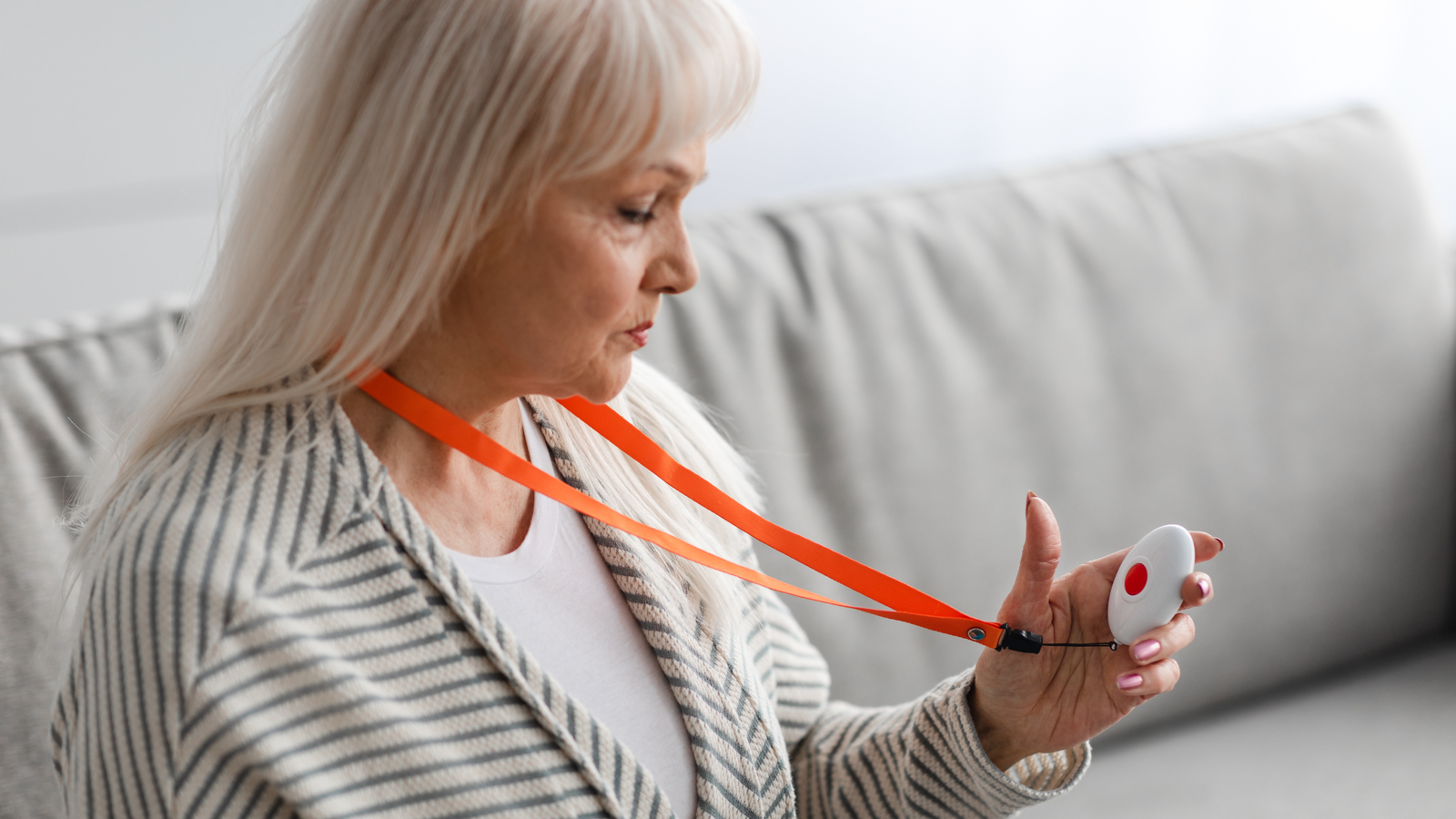
Just a few years ago, an emergency home call system usually consisted of a base station in the home and a small handheld transmitter. The concept was simple: in an emergency, a central emergency call center was notified by pressing a button.
This principle still works reliably today. However, the daily lives of many people have changed. Seniors remain active longer, travel, go for walks, or spend time in the garden. At the same time, more and more older people live alone, while relatives often live further away.
Demographic change is also altering the demands on care. The number of older people is continuously increasing, while fewer caregivers are available. This increases the need for technical solutions that can provide safety and meaningfully support relatives and professional care.
Modern emergency call systems are therefore evolving from a mere emergency button to intelligent companions in everyday life.
Demographic Change: Why New Solutions Are Needed
Germany's population is aging. With increasing life expectancy, the number of people who want to live independently in their own homes for as long as possible is also growing.
At the same time, families and care services face new challenges. Professional commitments, greater distances, and the increasing shortage of skilled workers make seamless care difficult.
Digital assistance systems cannot replace this development – but they can help to maintain independence longer and organize help faster in an emergency. The emergency call system of the future is therefore much more than a technical device. It becomes an important building block for a self-determined life in old age.

Artificial Intelligence is changing the emergency home call system
Artificial intelligence is no longer just a topic for smartphones or autonomous driving. It is also opening up new possibilities in the healthcare sector.
In modern emergency call systems, AI helps to better recognise movement patterns and assess situations more realistically. This means that everyday movements can be distinguished from actual emergencies more frequently. The aim is not to make decisions for people, but to reliably support them at the decisive moment.
This development is playing an increasingly important role, especially in automatic fall detection.
When sensors understand more than just movement
Earlier systems often reacted to individual shocks or abrupt movements.
Modern sensor technology, on the other hand, considers the entire movement sequence. Multiple sensors simultaneously detect changes in position, acceleration, and movement patterns. Only the combination of this information allows for significantly more precise assessment.
This creates intelligent systems that can better distinguish between everyday activities and an actual emergency.
FallGuard360°: Intelligent Fall Detection for Everyday Life
With FallGuard360°, Gardia pursues precisely this approach.
The intelligent fall detection not only analyzes a single movement, but evaluates various sensor data in context. This allows the system to more reliably detect typical fall patterns while reducing false alarms.
For users, this primarily means one thing: more safety, without unnecessary disruption to daily life.
Another advantage is that the technology works in the background. The Gardia emergency wristband does not require complicated operation in everyday life. If FallGuard360° detects a possible fall, the stored emergency procedure automatically starts. If the affected person does not respond, relatives or – depending on the chosen model – a 24-hour emergency call center can be informed.
Especially in cases of unconsciousness or severe disorientation, this automatic support can be crucial.
More than just an emergency wristband

The future begins with simple technology
The more intelligent emergency call systems become, the easier they should be to operate. This is precisely the biggest challenge in the coming years. Technology should adapt to people – not the other way around.
A modern home emergency call system must therefore work reliably, accompany daily life inconspicuously, and be usable even by people with little experience with digital devices. Only when modern technologies are understandable and uncomplicated can they unleash their full potential.
Conclusion
The future of home emergency call systems will not solely be determined by new technologies, but by their meaningful application in everyday life. Artificial intelligence, intelligent sensor technology, and digital networking can help older people live independently for longer and significantly relieve the burden on their relatives.
The Gardia emergency call wristband and the intelligent FallGuard360° fall detection already demonstrate today how modern technology can create safety without being complicated. Because the best innovation is one that simply works at the crucial moment.
FAQ/Frequently Asked Questions
What is an intelligent home emergency call system?
What role does artificial intelligence play in an emergency call system?
What makes Gardia's FallGuard360° fall detection special?
Does a smart emergency call system replace family members or caregivers?
Who is the Gardia emergency call bracelet suitable for?
"I want to remain independent, but not be alone in an emergency. That's precisely why Gardia, with its automatic fall detection, gives me such a good feeling."