Enjoying Garden Time: Safe and Active Through Spring

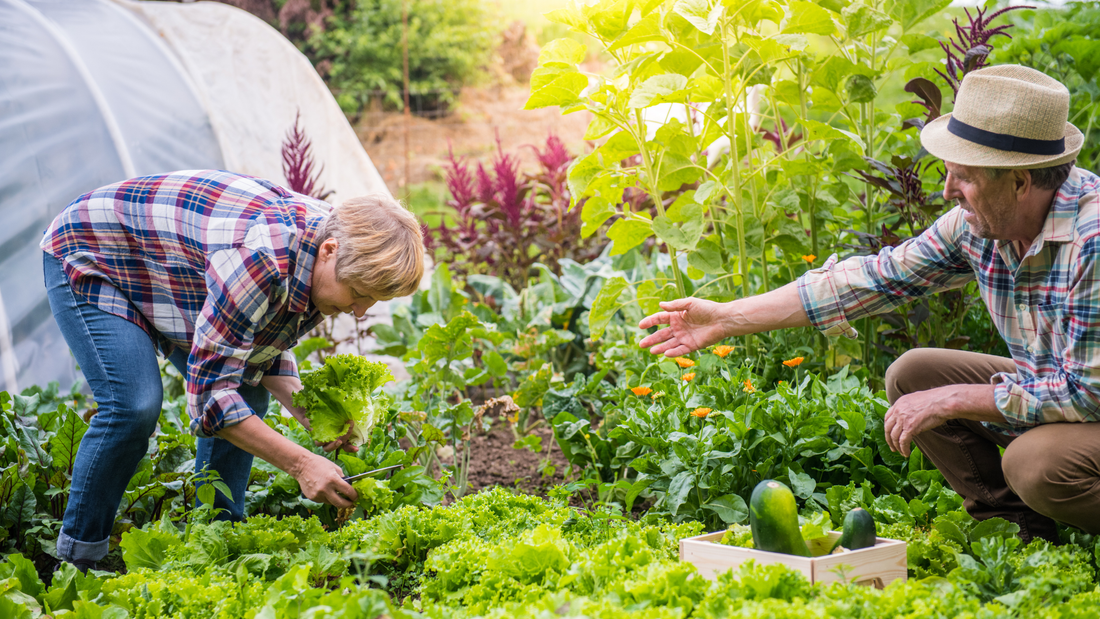
For many seniors, the first warm days herald the most wonderful time of the year. The garden once again becomes the focus of daily life. Planting, preparing beds, cleaning paths, or simply enjoying the sun. Exercise in the fresh air strengthens muscles, circulation, and mood.
At the same time, the risk of falls increases significantly in spring. The reason is not only the uneven ground. After the winter months, strength, balance, and reaction time are often reduced. If you then suddenly do several hours of physical work, you challenge your body more than you might think.
In this article, you will learn why gardening poses particular risks, how you can effectively prevent them, and why additional background protection can be useful.
Why Gardening is So Good for Body and Mind
Time spent in the garden has a positive effect on body and soul. Even simple activities promote mobility and endurance.
Typical gardening tasks such as:
- Preparing flowerbeds
- Planting flowers
- Mowing the lawn
- Harvesting herbs
- Watering plants
keep the body moving without overstraining it. At the same time, working with earth and plants has a relaxing effect. Many people report feeling calmer, more balanced, and more content after a day in the garden.
Why the risk of falling measurably increases in spring
After winter, muscle strength, balance, and reaction speed are often reduced. Even fundamentally active seniors experience a seasonal decline in performance.
At the same time, several risk factors converge in the garden:
- Uneven ground
- Moisture and moss formation
- Carrying loads
- Quick changes in position
- Working in a bent posture
The body suddenly has to coordinate complex movements again. Especially straightening up from a kneeling position or twisting sideways with weight in hand strongly challenges balance and core stability. Many falls are not caused by "carelessness" but by a combination of muscle fatigue, slowed reaction, and unstable ground.
What many underestimate: The garden is a "delayed accident scene"
Indoors, help is often more readily available. In the garden, however:
- You work alone
- You are out of sight
- You often don't carry a phone
Therefore, a fall outdoors more often means that those affected remain lying for longer. Medically, this is referred to as a "long lie." Remaining lying for an extended period after a fall can:
- Worsen circulatory problems
- Promote hypothermia
- Cause muscle damage
- Delay recovery
A quick response is crucial – not only for severe injuries.
Greater safety when gardening
The Gardia emergency wristband offers additional safety in everyday life – at home, in the garden, or on the go. In an emergency, help is alerted at the touch of a button or through automatic fall detection. This maintains freedom of movement while a reliable emergency call system is active in the background.

What Happens in the Body During a Fall
A fall is usually not an accident. It happens when the body temporarily loses control of balance and posture.
Whether one can still recover depends on fractions of a second. Muscle strength, reaction speed, and coordination must work together precisely.
What changes with age:
As we age, several processes occur simultaneously:
- Muscle mass decreases
- Reactions slow down
- Sense of balance becomes less precise
- Perception in feet and joints diminishes
This makes it harder to compensate for sudden movements or a shift in the body's center of gravity.
Think about safety in the garden
In many garden accidents, the actual risk is not in the fall itself, but in help arriving too late. Especially when working alone, an accident may initially go unnoticed.
Support is often quickly available inside the house. In the garden, however, additional factors arise:
- greater distances to the house
- restricted visibility due to plants or buildings
- lack of direct contact with other people
- a smartphone is often not readily available
Therefore, it makes sense to consider in advance how help can be reached quickly in an emergency. Mobile emergency call systems like the Gardia emergency call wristband with automatic fall detection can provide additional safety by informing contact persons automatically or at the push of a button in an emergency.

Concrete Measures for More Security in the Garden
1. Realistically assess your physical starting position
After the winter months, your resilience is often reduced. Honestly check how stable your balance and muscle strength currently are. If you stand insecurely or tire quickly, you should start the season particularly carefully and, if necessary, seek medical advice.
2. Gradually increase the load
Avoid long work sessions at the beginning of the season. Start with shorter phases and gradually increase duration and intensity. The body needs time to get used to repeated twisting movements, bending, and carrying.
3. Specifically train your balance
Fall prevention doesn't start in the garden, but in everyday life. Exercises to stabilize the leg and core muscles improve reaction time. Even simple balance exercises can measurably increase stability.
4. Systematically check the work environment
Check paths, patios, and lawns for unevenness, wetness, or loose objects. Remove tripping hazards such as hoses or tools immediately after use. Good lighting is also important outdoors.
5. Choose suitable equipment
Sturdy shoes with non-slip soles are essential. Ergonomic tools and stable garden stools reduce incorrect loads. Work on unsafe ladders or makeshift stepping surfaces should be avoided.
6. Take fatigue seriously
Muscle fatigue is one of the most frequently underestimated risk factors. Reaction speed and coordination decrease with increasing exhaustion. Plan regular breaks and stop working before clear signs of fatigue appear. Especially when gardening alone, it should be clear how help can be reached in an emergency. A mobile emergency call system can provide additional safety here. It is important that alarm and emergency call chains are defined in advance and that the system is reliably worn.
Conclusion
For many people, gardening is one of the most enjoyable activities in spring and summer. It keeps them physically active, provides balance, and brings joy to everyday life. At the same time, it's worth keeping an eye on potential risks. With simple precautions, a realistic assessment of one's own strength, and additional support from modern technology, the risk of falling can be significantly reduced.
This way, the garden remains a place of relaxation – and not of worry.
FAQ/Frequently Asked Questions
What are the most common causes of accidents in the garden?
Most accidents are caused by trip hazards, slippery paths or working on ladders.
Should you always have your phone with you while gardening?
A mobile phone can be helpful – but it is not always at hand or quickly accessible.
Is gardening healthy for older people?
Yes. Moderate gardening promotes mobility, strength, and well-being.
What to do when you often work alone in the garden?
In this case, it is advisable to have a way to quickly contact relatives or helpers.
Do you have to be tech-savvy for an emergency call system?
No. Systems like the Gardia emergency wristband are deliberately designed to be simple and work with just one button.
"Since I've been spending more time in the garden again, I feel much more active. I used to sometimes worry when I was outside alone. With my Gardia wristband, I simply feel good and can really enjoy my garden again."