Fermented Foods in Summer: Benefits, Drawbacks, and 4 Simple Recipes

Kimchi in bowls, kefir for breakfast, pickled gherkins for a barbecue, or a spoonful of sauerkraut on a sandwich: fermented foods are more popular than they have been in a long time. Yet, fermentation is anything but new. For thousands of years, people have been using bacteria, yeasts, and fungi to preserve food and alter its taste. Especially in summer, fermented foods are a great addition to the plate. Fresh vegetables are in season, many dishes can be light, and the tangy, spicy flavor provides variety. At the same time, fermenting helps you preserve excess vegetables from the garden, balcony, or farmer's market for longer. But how healthy are fermented foods really? What benefits can they have and what should you look out for?
What is Fermentation?
Simply put, fermentation means microorganisms transform components of a food. For vegetables, this usually refers to lactic acid fermentation. Naturally occurring lactic acid bacteria use the sugar in the vegetables and produce lactic acid. This lowers the pH value, creates an acidic environment, and many undesirable germs are less able to multiply. The result: the food becomes more durable, tastes sourer, and develops new flavors.
Among the most well-known fermented foods are:
- Sauerkraut and Kimchi
- Yogurt, Kefir, and Buttermilk
- Cheese
- Sourdough bread
- Miso, Tempeh, and Natto
- Soy sauce and Tamari
- Kombucha
- Fermented cucumbers, carrots, beetroot, or radish
Fermentation is not the same as pickling in vinegar. Pickled vegetables get their sour taste from added vinegar. In fermentation, the acid is only produced by the work of microorganisms.
Why fermented foods are a great fit for summer
In summer, many people eat lighter meals: more salads, raw vegetables, fruit, bowls, and cold dishes. Fermented vegetables complement this cuisine particularly well, as they provide acidity, seasoning, and a crisp contrast. A spoon of kimchi can add more depth to a rice bowl. Fermented carrots go well with hummus and flatbread. Sauerkraut makes a whole-grain sandwich more interesting. Kefir and natural yogurt are a refreshing base for cold soups, dips, or breakfast bowls. In addition, fermentation is a practical method against food waste. If you have bought too many cucumbers, carrots, radishes, or cabbage, you can ferment some of them and enjoy them weeks later.
Benefits of Fermented Foods
1. Longer Shelf Life Without Many Additives
Fermentation is a natural preservation method. The lactic acid produced creates an environment where many pathogenic germs are less able to multiply. This can be particularly practical for seasonal vegetables.
It remains important: you should prepare fermented vegetables hygienically, keep them completely covered by brine, and store them correctly. If you discover visible mold, discard the entire contents.
2. New Flavors and More Variety
Fermentation changes taste and texture. Mild cabbage becomes spicy-sour sauerkraut, cucumbers become aromatic pickles, and milk turns into yogurt or kefir. Especially if you want to eat more plant-based foods, fermented ingredients can add more flavor to simple dishes. This often helps you use less salt, sugar, or heavily processed ready-made sauces.
3. Partially Better Digestibility
During fermentation, some components of a food are already altered or broken down. As a result, some people may tolerate products like sourdough bread, yogurt, or kefir better than their non-fermented original products. For example, some of the lactose in fermented dairy products is broken down. If you have a diagnosed lactose intolerance, allergy, or intestinal disease, you should still test individually and seek medical or nutritional advice if unsure.
4. Interesting for Gut Flora
Fermented foods are often associated with the gut microbiome. Some products contain living microorganisms that could positively influence the diversity of gut flora. However, a varied diet with many plant-based foods, fiber, and different food groups remains more important than a single product. Not every fermented food is automatically probiotic. Also, not every product still contains live cultures after processing: in pasteurized products, many microorganisms can be killed by heating.
5. Nutrient Absorption Can Change
Fermentation can alter the availability and digestibility of individual nutrients. Depending on the food, cultures used, and preparation, certain minerals and vitamins may be more available. Therefore, fermented vegetables or yogurt are not miracle cures. However, they can add variety to your diet.
For whom fermented foods are not always ideal
As exciting as fermentation is, it's not suitable for everyone without restrictions.
1. Histamine can cause discomfort
Histamine can be produced during fermentation. If you have histamine intolerance, you may react sensitively to kimchi, sauerkraut, kefir, kombucha, or aged cheese. Possible symptoms range from headaches and skin reactions to gastrointestinal problems. If you suspect you have histamine intolerance, you should not try fermented foods indiscriminately, but seek medical advice.
2. Pay attention to salt content
Fermented vegetables are usually made with salt and can therefore be relatively high in salt. If you need to watch your blood pressure or have been advised to follow a low-salt diet, it's better to eat smaller portions and make your other meals correspondingly lower in salt.
3. Homemade requires hygiene and patience
Fermenting is straightforward but not entirely risk-free. You should process vegetables cleanly, keep them completely submerged under the brine, and not fill the jar to the brim, as gas is produced during fermentation. A whitish film, known as Kahm yeast, is usually harmless but can affect the taste. If you discover fluffy, colored, or foul-smelling mold, dispose of the entire jar.

Eat light, stay active, feel safe
Light meals, sufficient hydration, and regular exercise are part of a good summer routine for many people. A morning walk, fresh vegetables from the market, or a shared meal on the balcony can be just as important as small routines that provide a sense of security. Especially if you or a loved one are often out and about alone, being prepared for emergencies can be reassuring. The Gardia emergency call bracelet can help you stay independent even outside your own four walls – for example, when walking, in the garden, or on the way to the shops. This leaves more room for the beautiful aspects of summer: being active, eating well, and enjoying everyday life with a sense of security.
Fermentation at Home: The Key Rules
For vegetable ferments, you usually only need vegetables, salt, water, a clean jar, and a weight to keep them submerged.
Please note these basic rules:
- Use only fresh, undamaged vegetables.
- Work with very clean jars and utensils.
- Use about 20 to 30 grams of salt per liter of water for brine.
- Ensure the vegetables are always completely covered with brine.
- Leave space at the top of the jar, as gas is produced during fermentation.
- Ferment at room temperature without direct sunlight.
- After a few days, allow the vegetables to continue ripening in a cool place.
- If you notice mold, a putrid smell, or unusual discoloration, discard the ferment.
Enjoy healthily. Safely through the summer.
With the Gardia emergency bracelet, you can call for help at the touch of a button in an emergency – for more safety and independence in everyday summer life. This way, walks, gardening, and short errands remain relaxed and enjoyable.

Four Summery Recipes with Fermented Foods

1. Summer Bowl with Kimchi, Avocado and Edamame
For 2 servings
Ingredients
- 120 g jasmine or basmati rice
- 240 ml water
- 150 g edamame, frozen
- 1 small cucumber, approx. 250 g
- 2 carrots, approx. 160 g
- 1 avocado
- 100 g kimchi
- 2 spring onions
- 1 tbsp sesame seeds
For the dressing
- 1 tbsp soy sauce
- 1 tbsp lime juice
- 1 tsp sesame oil
- 1 tsp maple syrup or honey
- 1 tsp freshly grated ginger
- 1 tsp water
Preparation:
- Cook the rice with 240 ml water according to package instructions. Then let it cool for 10 minutes.
- Cook the edamame in boiling water for 3 to 4 minutes, drain and rinse briefly with cold water.
- Slice the cucumber thinly. Grate the carrots coarsely. Halve the avocado, remove the pit and slice the flesh. Cut the spring onions into fine rings.
- Mix all ingredients for the dressing.
- Divide the rice into two bowls. Arrange cucumber, carrots, edamame, avocado and kimchi on top. Drizzle with the dressing and sprinkle the bowl with sesame seeds and spring onions.
Tip: Kimchi can be spicy. If you prefer it milder, use only 50 g initially and serve the rest separately.

2. Cold Cucumber Kefir Soup with Dill and Chickpeas
For 2 servings
Ingredients
- 400 g plain kefir
- 150 g plain yogurt
- 1 cucumber, approx. 300 g
- 1 small garlic clove
- 2 tbsp finely chopped dill
- 1 tbsp finely chopped mint
- 1 tbsp lemon juice
- 1 tbsp olive oil
- ½ tsp salt
- ¼ tsp black pepper
- 160 g canned chickpeas, drained
- 2 slices wholemeal bread, approx. 100 g
Preparation:
- Wash the cucumber. Dice about a third and coarsely grate the rest.
- Finely chop or press the garlic.
- Mix kefir, yogurt, grated cucumber, garlic, dill, mint, lemon juice, olive oil, salt, and pepper.
- Chill the soup for at least 20 minutes.
- Before serving, sprinkle with diced cucumber and chickpeas. Serve the soup with wholemeal bread.
For more protein, you can add 100 g crumbled feta or 150 g fried tofu.

3. Crunchy Coleslaw with Sauerkraut, Apple, and Yogurt Dressing
For 4 servings as a side dish
Ingredients
- 250 g white cabbage
- 150 g sauerkraut, drained
- 2 carrots, approx. 160 g
- 1 apple, approx. 150 g
- 1 small red onion
- 150 g natural yogurt
- 1 tbsp whole grain or medium-hot mustard
- 1 tbsp apple cider vinegar
- 1 tsp maple syrup or honey
- 1 tbsp rapeseed oil
- ½ tsp salt
- ¼ tsp black pepper
- 2 tbsp chopped parsley
Preparation:
- Shred or finely slice the white cabbage. Add ¼ tsp salt and vigorously knead it in a large bowl for about 2 minutes.
- Roughly chop the sauerkraut. Grate the carrots. Core the apple and cut it into fine sticks. Slice the onion into thin strips.
- Whisk together yogurt, mustard, apple cider vinegar, maple syrup, rapeseed oil, remaining salt, and pepper to make a dressing.
- Mix all ingredients thoroughly and let the salad steep for at least 20 minutes.
- Sprinkle the salad with parsley before serving.
Tip: You can serve the salad with baked potatoes, grilled vegetables, falafel, or as a topping for burgers.

4. Fermented Ginger Carrots in a Jar
For 1 swing-top jar with approximately 1 liter capacity
Ingredients
- 500 g carrots
- 500 ml water
- 15 g salt
- 20 g fresh ginger
- 2 cloves garlic
- 1 tsp black peppercorns
- 1 tsp mustard seeds
- 1 bay leaf
- 1 small bunch of dill or 2 dill sprigs
Instructions:
- Rinse the swing-top jar, rubber gasket, and all utensils with very hot water.
- Peel the carrots and cut them into sticks about 1 cm thick. Slice the ginger thinly and lightly crush the garlic.
- Completely dissolve the salt in 500 ml of water.
- Place ginger, garlic, peppercorns, mustard seeds, bay leaf, and dill into the jar. Pack the carrots tightly into the jar.
- Pour in the brine until the carrots are completely covered, leaving about 2 to 3 cm of space from the rim of the jar.
- Weigh down the carrots with a fermentation weight, a clean small glass, or a suitable weighting tool to ensure no vegetables protrude from the brine.
- Close the jar and let it stand at room temperature for 4 to 6 days, away from direct sunlight.
- Afterward, taste the carrots. Once they have a pleasant sour taste, store them in the refrigerator. They will keep for several weeks there.
If you notice mold, a strong unpleasant odor, or unusual discoloration, discard the entire ferment.

Fermented Foods: What You Should Know
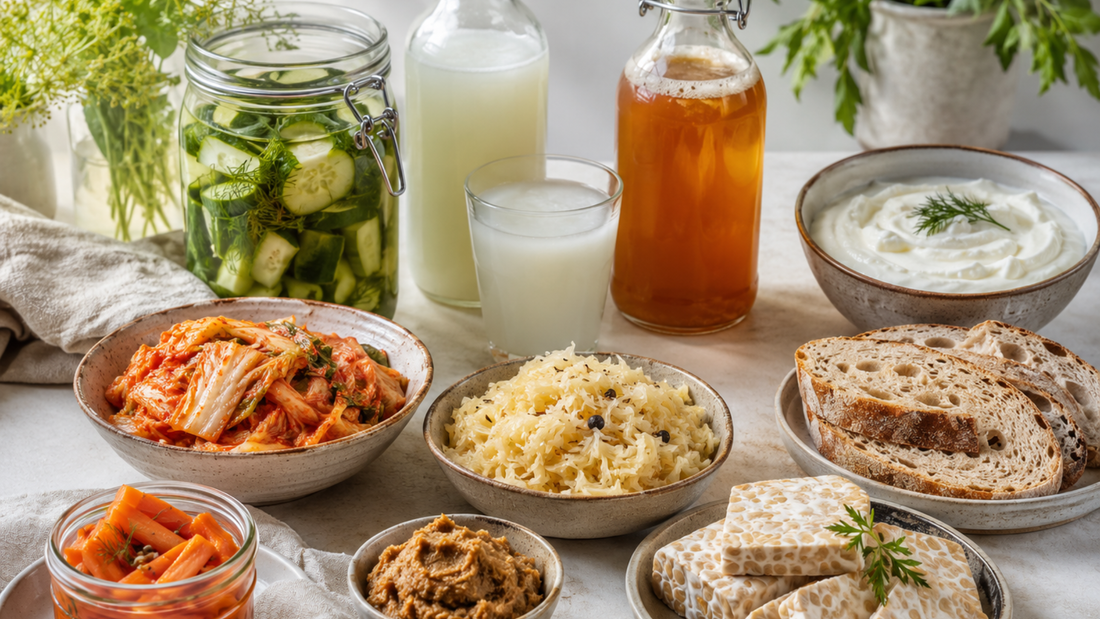
Fermented foods can make your diet more varied and are particularly well-suited to light dishes in summer. Kimchi, sauerkraut, kefir, yogurt, sourdough bread or fermented carrots not only bring new flavors to your plate, but can also help to preserve seasonal foods for longer.
1. Start with small amounts
If you have rarely eaten fermented foods before, it's best to start with small portions. One to two tablespoons of sauerkraut, some kimchi in a bowl, or a glass of kefir are enough to find out what you like and what you tolerate well. Especially if you have a sensitive stomach, it can be useful to slowly increase the amount.
2. Pay attention to product quality
Not every fermented product is automatically healthy. For kombucha, ready-made kimchi products, or pickled vegetables, it's worth taking a look at the ingredient list. Look for as little added sugar as possible, a moderate salt content, and short ingredient lists. In pasteurized products, many living cultures may no longer be present due to heating. This does not mean that the product is fundamentally bad – but the possible effect of living microorganisms is then reduced.
3. Combine fermented foods with fiber-rich foods
Fermented foods are particularly effective in a balanced diet when combined with vegetables, legumes, whole grains, fruits, nuts, and seeds. These foods provide fiber, which is relevant for gut flora. Practical summer options include whole-grain bread with hummus and fermented carrots, a salad with sauerkraut, or a bowl of rice, vegetables, edamame, and kimchi.
4. Consider salt and histamine
Fermented vegetables are usually made with salt and can therefore be relatively salty. If you need to monitor your blood pressure or have been advised to follow a low-salt diet, it's better to enjoy fermented vegetables in smaller quantities. Histamine can also be produced during fermentation. If you have a histamine intolerance or notice symptoms such as headaches, skin reactions, or gastrointestinal problems after eating fermented foods, you should be cautious and seek medical advice.
5. Fermenting yourself: Hygiene is crucial
If you want to ferment vegetables yourself, use fresh ingredients, very clean jars, and the right amount of salt. The vegetables must be completely covered with brine throughout the entire fermentation process. This way, unwanted germs are less likely to multiply. A whitish coating, known as kahm yeast, is usually harmless but can affect the taste. However, if you notice mold, a putrid smell, or unusual discoloration, dispose of the entire ferment.
6. Fermented foods are a supplement – not a miracle cure
Fermented foods can enrich your diet both in terms of taste and nutrition. However, they do not replace a balanced diet and are not a panacea for gut problems or the immune system. You benefit most from an overall varied diet: plenty of vegetables and fruits, whole grains, legumes, high-quality protein sources, and as few highly processed foods as possible. Fermented foods can be a delicious, practical, and summery component of this.
Conclusion
Fermented foods are more than a fleeting trend. They bring variety to your summer kitchen, help you preserve seasonal vegetables, and can be a valuable addition both in terms of taste and nutrition. If you're new to fermented foods, it's best to start with small amounts: a spoonful of sauerkraut with lunch, some kimchi in a bowl, plain kefir in a smoothie, or homemade fermented carrots as a snack. This way, you can find out what you like and what you tolerate well. In the end, the same applies here: Kimchi, kefir, or kombucha alone do not make your diet healthy. What is crucial is a mix of plenty of vegetables, fruits, whole grains, legumes, high-quality protein sources, and as few highly processed foods as possible.
FAQ/Frequently Asked Questions
Are fermented foods really healthy?
Fermented foods can be a valuable addition to a balanced diet. They add variety to your plate, change taste and texture, and depending on the product, can contain live cultures. However, your overall diet remains crucial: plenty of vegetables, fruits, whole grains, legumes, and high-quality protein sources are more important than individual trend products.
What does Gardia have to do with healthy eating and fermentation?
While Gardia is not directly associated with fermented foods, it can play a role in daily life concerning an independent and safe lifestyle. Elderly people or individuals requiring support often benefit from clear routines, a balanced diet, and practical aids for greater safety in everyday life. Fermented foods such as natural yogurt, kefir, or mild sauerkraut can be easily integrated into the diet – for example, as breakfast, a snack, or a side dish with light summer meals.
How much fermented food should you eat?
There is no fixed general amount. If you have rarely eaten fermented foods so far, it is best to start with small portions. This could be, for example, a glass of natural kefir, a small yogurt, or one to two tablespoons of kimchi or sauerkraut. This way, you can observe what you tolerate well.
Can you make fermented vegetables yourself?
Yes, you can ferment vegetables such as carrots, cucumbers, cabbage, or radishes yourself. Important factors include fresh ingredients, clean jars, sufficient salt, and proper storage. Ensure that the vegetables remain completely covered by the brine. If you discover mold, a foul odor, or noticeable discoloration, discard the entire ferment.
Are kimchi, sauerkraut, and kefir automatically probiotic?
Not automatically. Probiotic means that certain living microorganisms, in sufficient quantities, have a proven health benefit. Fermented foods can contain live cultures, but they do not automatically qualify as probiotic. In pasteurized products, many microorganisms are often no longer active due to heating.
How can Gardia help you enjoy the summer independently?
An active summer often means: going for walks, gardening, shopping, or spending time outside your own four walls. Especially if you live alone or relatives want more security, a mobile emergency call system can be a sensible addition. With Gardia, you can request help at the touch of a button in an emergency. Depending on the solution, stored contacts or an emergency call center are informed. This can help you to remain independent even when you're out and about – and to enjoy the summer with a sense of security.
"My daughter used to call often when I was out alone. Not because something had happened, but because we both had an uneasy feeling. Since I started wearing Gardia, that's changed. I still enjoy going for walks, doing my own shopping, and spending a lot of time in the garden. If I ever do need help, I know I don't have to search for my phone first. That gives me a piece of my independence back and my daughter more peace of mind."